
Ritual Axis and Ascent Routes
According to materials from the Tai'an City Forestry Bureau, Dai Temple at the southern foot of Mount Tai is the starting point of the entire central ascent axis; throughout history, emperors would perform rites there before proceeding to the summit to conduct the feng and shan ceremonies. Ascending along this axis from the mountain base, the Eighteen Bends is the steepest section of stone steps, and the South Heavenly Gate is the defining threshold marking entry into the summit zone; the difference in elevation between the two constitutes a pronounced break both topographically and experientially.
The value of this axis lies in its coherence: the architectural complex at the foot, the stele inscriptions and paths at mid-mountain, and the sacrificial facilities at the summit correspond to one another spatially, together embodying the long-accumulated result of natural topography and ritual order overlapping. When UNESCO inscribed Mount Tai in 1987, it recognised the temples, stele inscriptions, and mountain paths as an integrated landscape, rather than evaluating any single component in isolation.
Historical Name and Summit Elevation
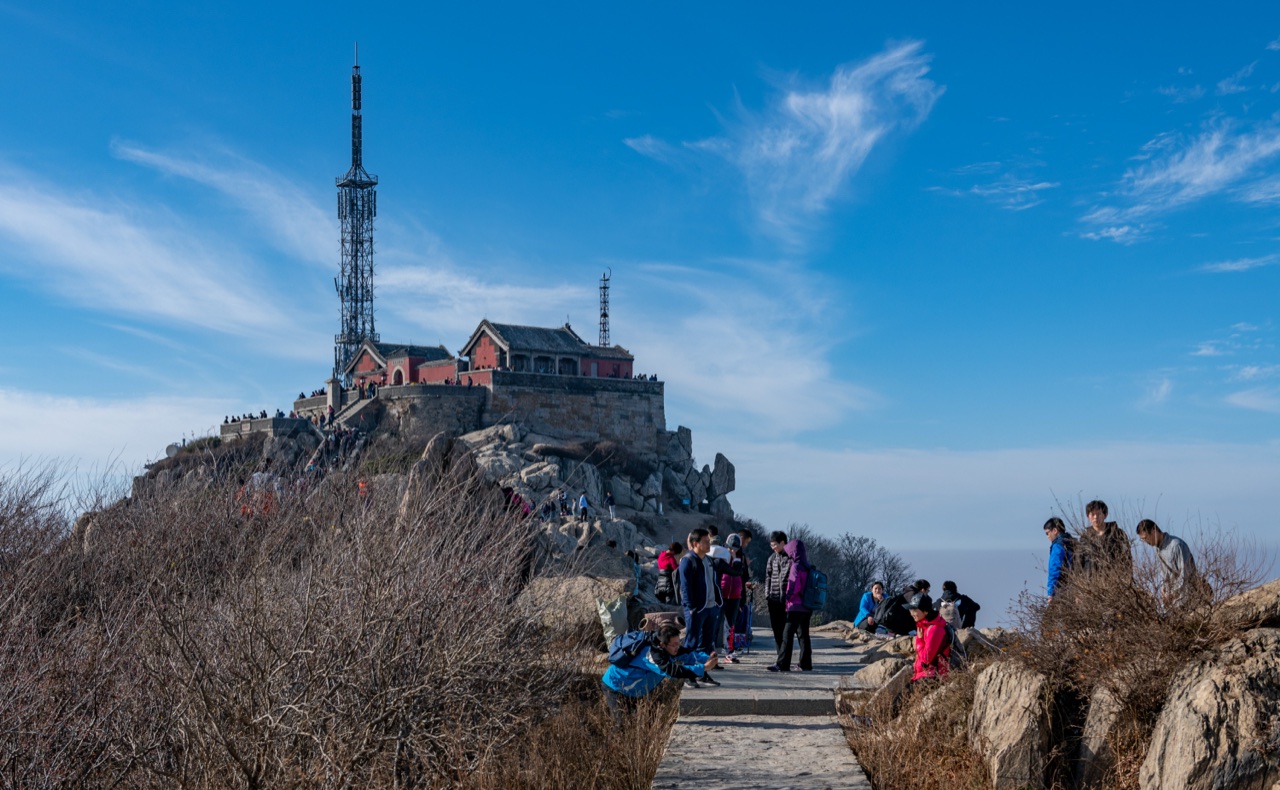
Mount Tai is referred to in historical sources as Daizong (岱宗), a name that emphasises its position as the foremost in the Five Sacred Mountains hierarchy; along with Dongyue (Eastern Sacred Mountain), this is one of the common designations used alongside the formal name. Jade Emperor Summit is the specific place name for the core area at the top of the mountain. According to the 2007 announcement by China's National Bureau of Surveying and Mapping and the Ministry of Construction, the surveyed elevation of Jade Emperor Summit is 1,532.7 metres.
Stele Inscription Tradition and Cultural Accumulation
Along the mountain paths of Mount Tai, carved stones and stele inscriptions from successive dynasties have been preserved, their contents ranging from records of imperial tours and literati inscriptions to religious dedications, spanning a continuous period of more than two thousand years. These inscriptions are not isolated artefacts but are embedded within the mountain's topography, forming together with the stairways and cliff faces the defining characteristic that sets Mount Tai apart from an ordinary natural mountain — the mountain body itself is both a natural geographical unit and a historical record that has been continuously written upon.