
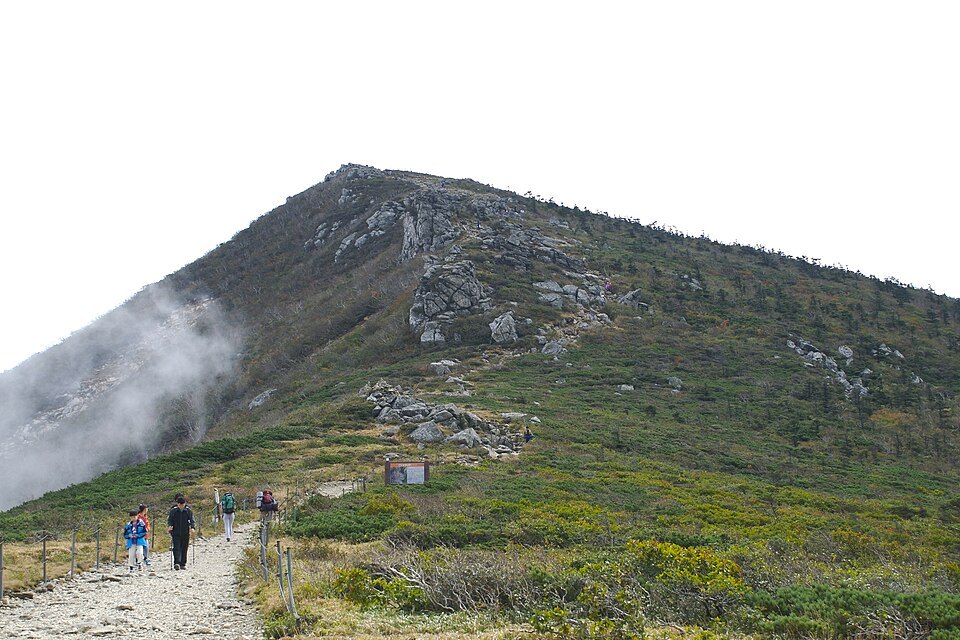
Three views of the same mountain
Korea National Park Service divides the mountain into Naeseorak on the Inje side, Namseorak for the southern flank running from Hangyeryeong to Osaek, and Oeseorak for the eastern slopes toward Sokcho and Goseong. Daecheongbong, Jungcheongbong, and Socheongbong form a high ridgeline visible from multiple directions. When names alone make it hard to get one's bearings, locating the coastline and the Inje-side valleys on a map first makes orientation easier.
The Taebaek Mountains, to which Seoraksan belongs, feature rocky ridges of exposed granite and gneiss alongside deeply incised valleys. Standing on a high rock ridge like Ulsanbawi in Oeseorak opens up views of Sokcho city and the East Sea, while valley spots such as Biseondae bring sheer rock walls close on either side of the stream. As altitude and vantage point change, the same mountain's rocky terrain reveals itself in different forms.
From Biseondae to Geumganggul, from Sinheungsa to Ulsanbawi
Heading from Seorakdong through Sinheungsa toward Biseondae, you follow the valley before climbing to the middle slopes of Mireukbong in the direction of Geumganggul. Geumganggul is a natural cave formed in the rock. It is said that the monk Wonhyo practiced here. Near the cave, you can take in Cheonbuldong Valley and Gongnyong Ridge spread out at different elevations.
Taking a different branch from Sinheungsa, you pass Heundeulbawi and Gyejogram before climbing toward Ulsanbawi. The valley-following section and the staircase section up the rock face can be distinguished on the map. The Osaek route in Namseorak heads straight up through forest to Daecheongbong, giving it a different character from the two Oeseorak trails that trace valleys and rocky ridgelines.
Siberian dwarf pine on Daecheongbong and the history of Seoraksan's protection
Seoraksan was designated a Natural Monument in 1965 and became a national park in 1970. Following its designation as a UNESCO Biosphere Reserve in 1982, international attention extended beyond the landforms of the Taebaek Mountains' eastern slopes to the living organisms that inhabit them.
The Siberian dwarf pine growing around Daecheongbong and the long-tailed goral living on rocky terrain are the representative species UNESCO identified for Seoraksan. The dedicated protection of dwarf pine groves at high elevations shows that even within a single national park, the subjects of conservation differ from one peak, forest, and valley to the next.