
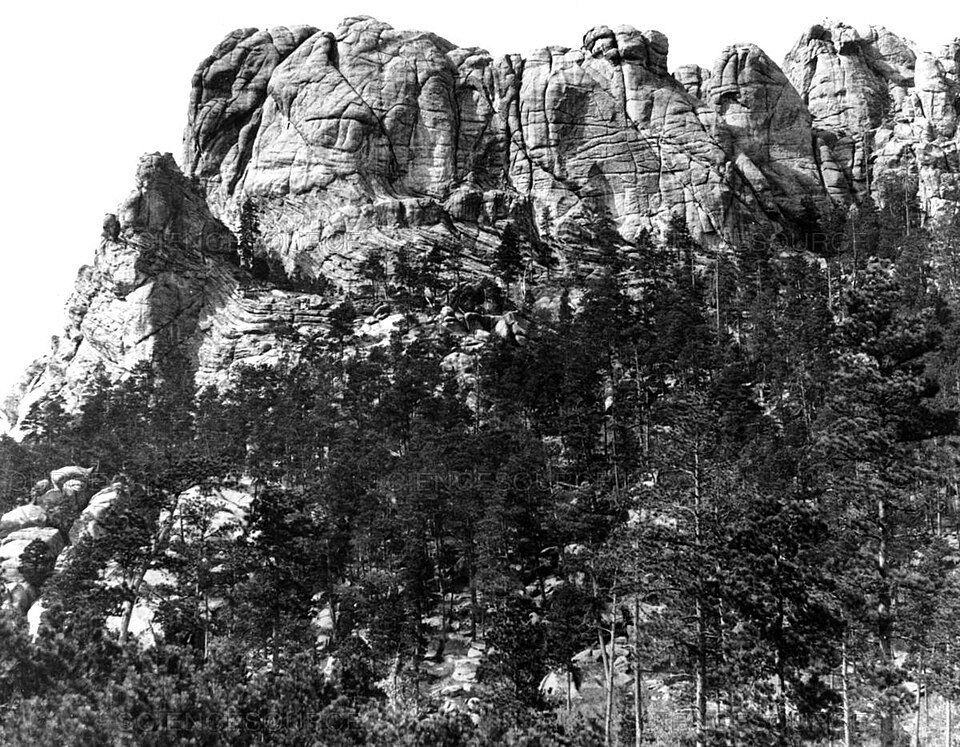
Granite Bedrock and the Shape of the Black Hills
Mount Rushmore's mass is composed of granite formed deep underground and exposed through the gradual uplift that shaped the Black Hills. The cliff face selected for carving is a product of that uplift and later erosion, and is geologically younger than the ancient crystalline rock beneath it.
The Lakota Name and the Question of Contested Ground
The National Park Service identifies Six Grandfathers Mountain as the translated Lakota name for the peak, documenting the area's spiritual significance to Lakota people before the monument was conceived. The NPS has also recorded that placing the carved monument on this landscape has been contested, treating that history as part of the site's cultural record.
Fourteen Years of Carving Under Two Directors
Carving began in 1927 under sculptor Gutzon Borglum. After his death in March 1941, his son Lincoln Borglum oversaw the final months before work ended that year. Workers removed granite with controlled dynamite, then refined surfaces with pneumatic drills; the finished faces measure roughly 18 metres, distinct from the mountain's overall summit elevation.