
A Name from the Mapping Era
The USGS assigned the official name to honor Reynold E. (Pete) Isto, who led USGS field parties mapping the Brooks Range in 1956 and was an early proponent of helicopter-supported survey work in Alaska. The name was formally proposed by Earl H. Beistline in 1966, a decade after the fieldwork it commemorates.
The 2016 Survey and Its Methods
Researchers Matt Nolan and Kit DesLauriers used overlapping aerial photographs combined with precise camera-position data to build a structure-from-motion terrain model, then verified results with GPS receivers placed directly on the summit. Repeat observations revealed variable snow cornices near the peak, a factor the team treated as distinct from the mountain's height advantage over neighboring Mount Hubley. Earlier USGS topographic sheets had shown conflicting elevations and inconsistent rankings among nearby peaks; the 2016 figure of 2,735.6 m, rounded to 2,736 m for cartographic use, resolved that ambiguity.
Glaciers and Setting
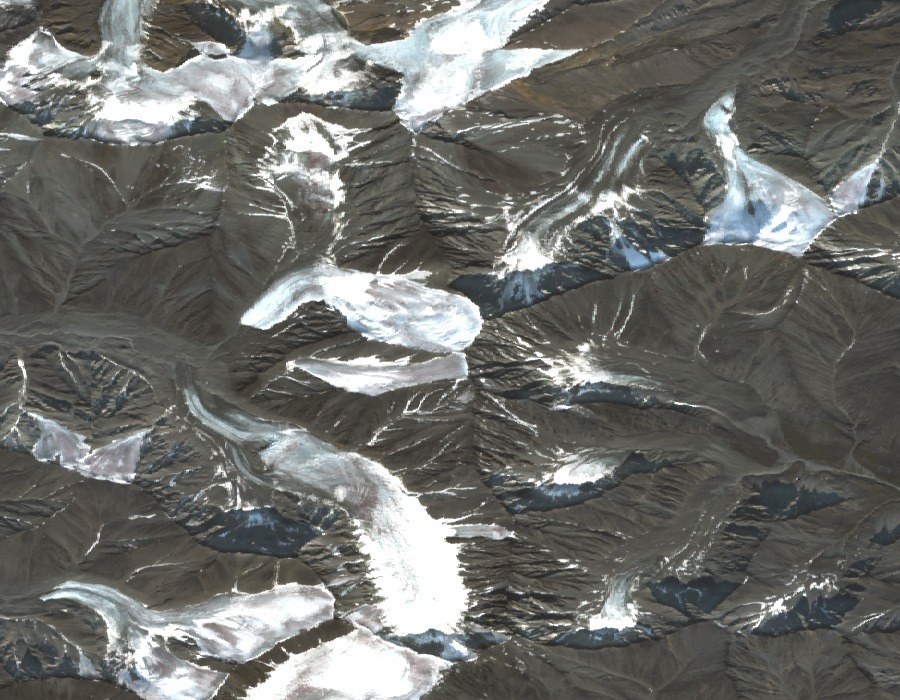
Satellite imagery shows Mount Isto surrounded by glaciated terrain within the Romanzof Mountains, a heavily glacierized subrange of the central Brooks Range. The peak lies on the North Slope, in the portion of Arctic National Wildlife Refuge that extends into the high country well above the coastal plain. Historical USGS mapping of the range was conducted through mid-twentieth-century field campaigns of which Isto's 1956 party formed a central part.