
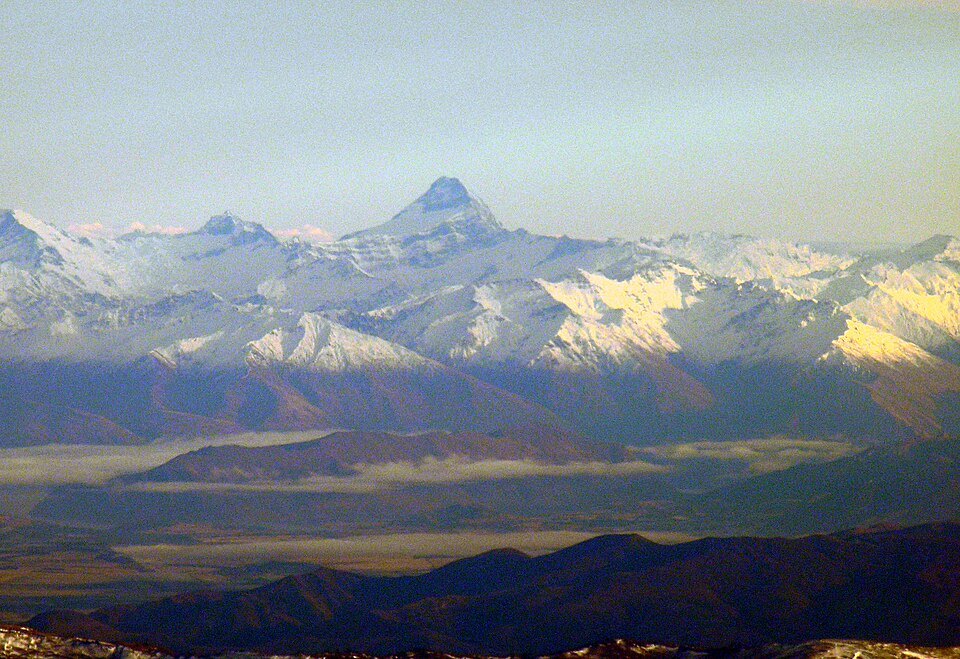
Position and Elevation
At 3,033 metres, Tititea / Mount Aspiring ranks as the 23rd-highest mountain in New Zealand. Its significance within the country's geography is sharpened by its isolation from the principal concentration of high peaks: it is the highest summit in New Zealand that lies outside the Aoraki / Mount Cook National Park region, giving it a commanding presence over the southern ranges of the South Island.
Naming: Survey, Settlement, and Legislation
The name Aspiring was given to the mountain in December 1857 by John Turnbull Thomson, then serving as Chief Surveyor for the Otago Province. Thomson's name passed into wider use and was applied to the surrounding landscape when Mount Aspiring National Park was created in 1964.
The mountain's official designation was updated in 1998 under Treaty Settlement Legislation — specifically Section 269 and Schedule 96 of the Ngāi Tahu Claims Settlement Act 1998 — to the dual form Mount Aspiring / Tititea. This change formally recognised the Ngāi Tahu name Tititea alongside the colonial surveyor's name, and both now carry equal official standing. The mountain's Wikipedia title renders the dual name as Tititea / Mount Aspiring, with the Māori name placed first.
A Peak That Defines Its Park
The relationship between the mountain and its national park is straightforward in origin: when the park was gazetted in 1964, it took its name directly from the peak that dominates the area. The park's subsequent expansion and the mountain's renamed status under the 1998 settlement legislation mean that Tititea / Mount Aspiring now stands as both the geographical and the symbolic centre of a protected landscape whose official identity has evolved to reflect the Treaty settlement process.