
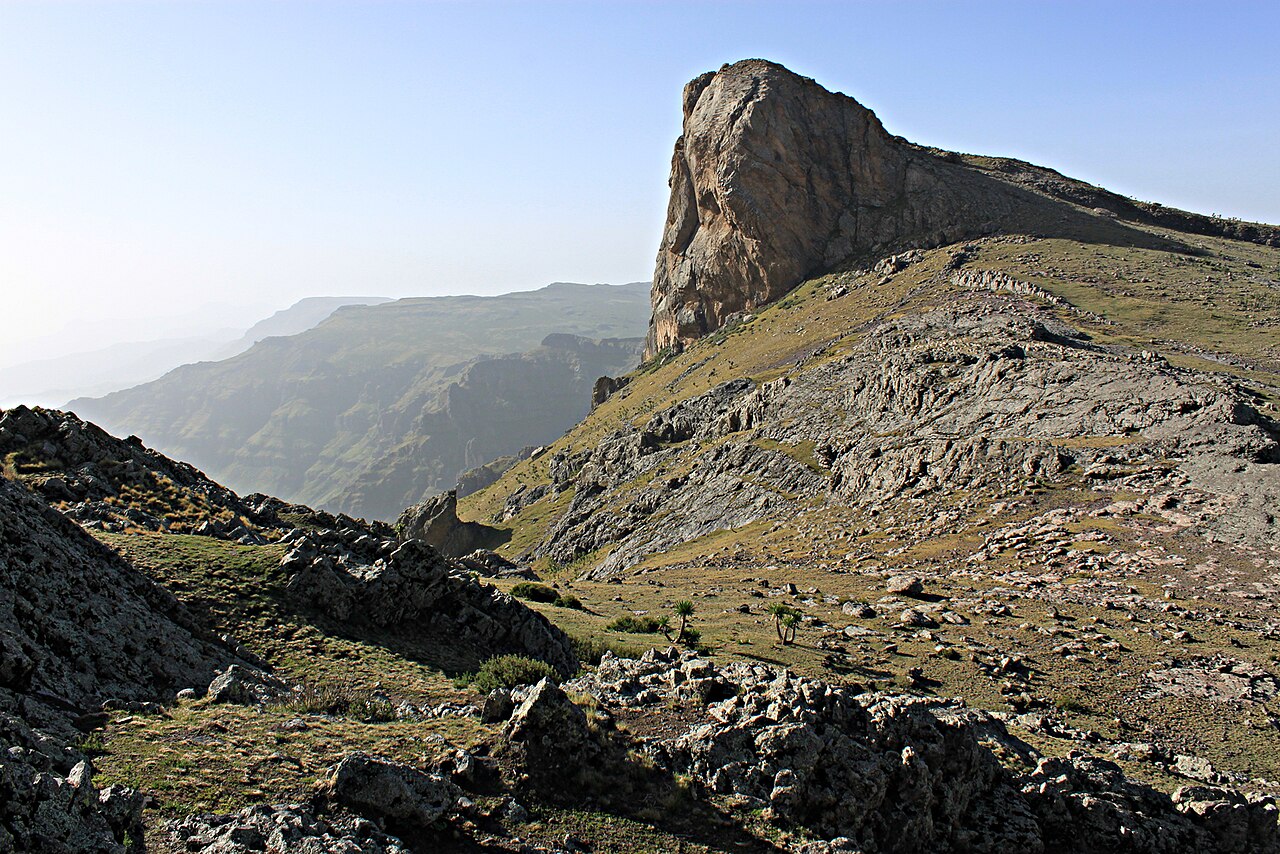
Location and Elevation
Eshete and colleagues record the summit elevation of Abuna Yosef as 4,286 metres, the figure used in scientific literature on the mountain. The mountain lies in the Lasta district of North Wollo, close to Lalibela. The spelling variants Abuna Yosef and Abune Yosef both appear in academic and conservation sources and refer to the same feature.
Afroalpine Habitat and the Ethiopian Wolf
Research estimated approximately 50 square kilometres of suitable Ethiopian wolf habitat on Abuna Yosef at the time of study, a discrete patch ecologically separated from larger highland complexes where the species occurs elsewhere in Ethiopia. Field research has documented highland rodents as a primary prey base for the Ethiopian wolf on the mountain, making the integrity of Afroalpine grassland directly consequential for wolf survival.
Conservation, Livelihoods and Cultural Landscape
Research by Eshete and colleagues documents communal livestock grazing as a primary land use on the mountain's Afroalpine pastures, bringing domestic animals into the wolf's core range. The Ethiopian Wolf Conservation Programme documents both Ethiopian wolves and gelada within a community conservation area in this landscape and works alongside resident communities whose land use predates formal conservation frameworks.
The wider terrain around Abuna Yosef includes churches and monasteries documented as part of a culturally and spiritually significant regional landscape, reflecting the long human history of a highland zone that is simultaneously a site of faith, agricultural life, and rare wildlife.