
Geology and Forest Habitats
The flysch stratigraphy of the Beskids produces the layered hillsides that characterise the range's lower and middle elevations. On the slopes of Lysá hora, the Czech Nature Conservation Agency documents native forest habitats within the Mazák reserve, where the black stork has been recorded as a nesting species in the standing forest stands of that protected area.
A Century of Meteorological Observation
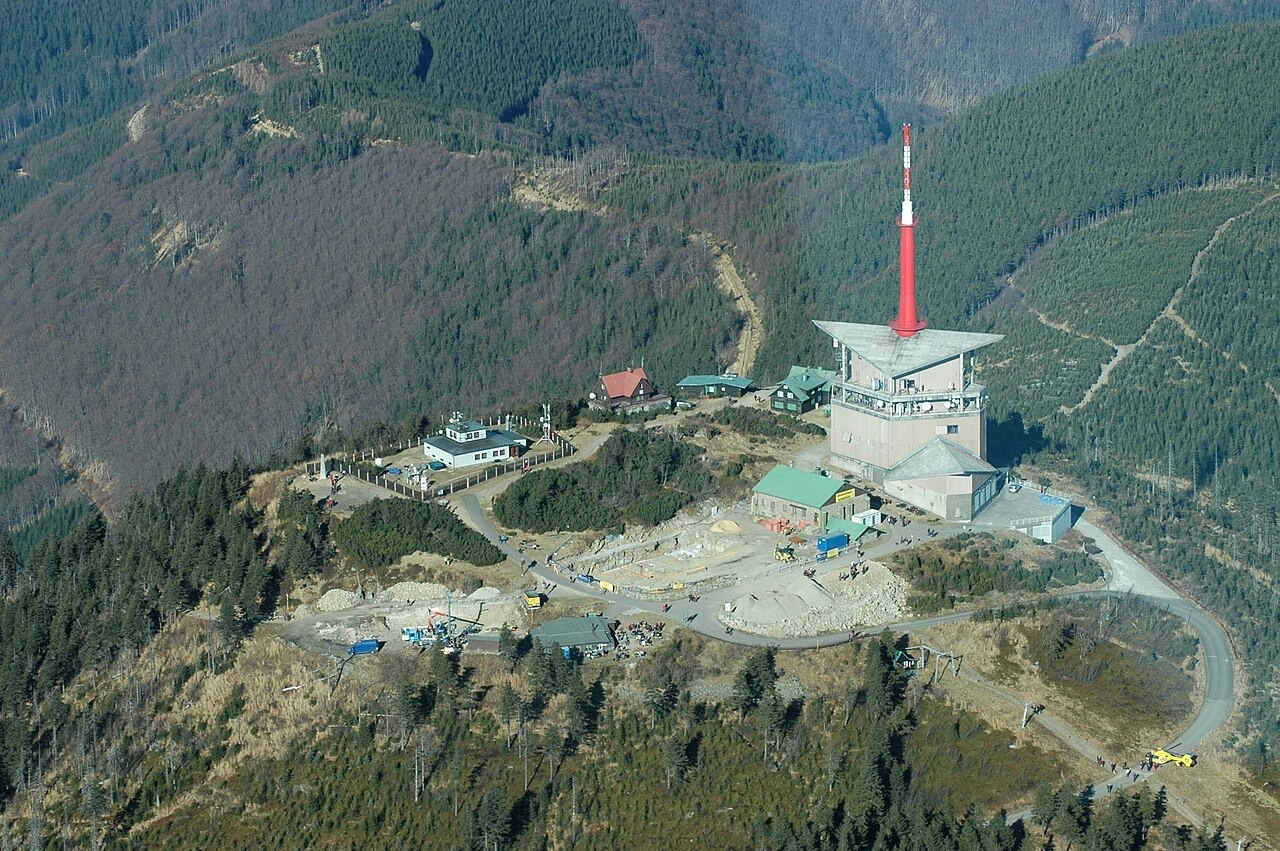
The Czech Hydrometeorological Institute dates the first systematic observations on Lysá hora to 15 July 1897, when early precipitation logs at the Albrecht hut recorded event types and the names of individual observers. That continuous record makes the site one of the most historically documented weather stations in the Carpathian arc.
Precipitation Chemistry Monitoring
Alongside its long climatological series, Lysá hora hosts a separate modern programme operated by the Czech Hydrometeorological Institute for analysing the chemical composition of rain and snow. This sampling work, distinct from the historical observation record, examines the constituents of precipitation collected at the summit station.