
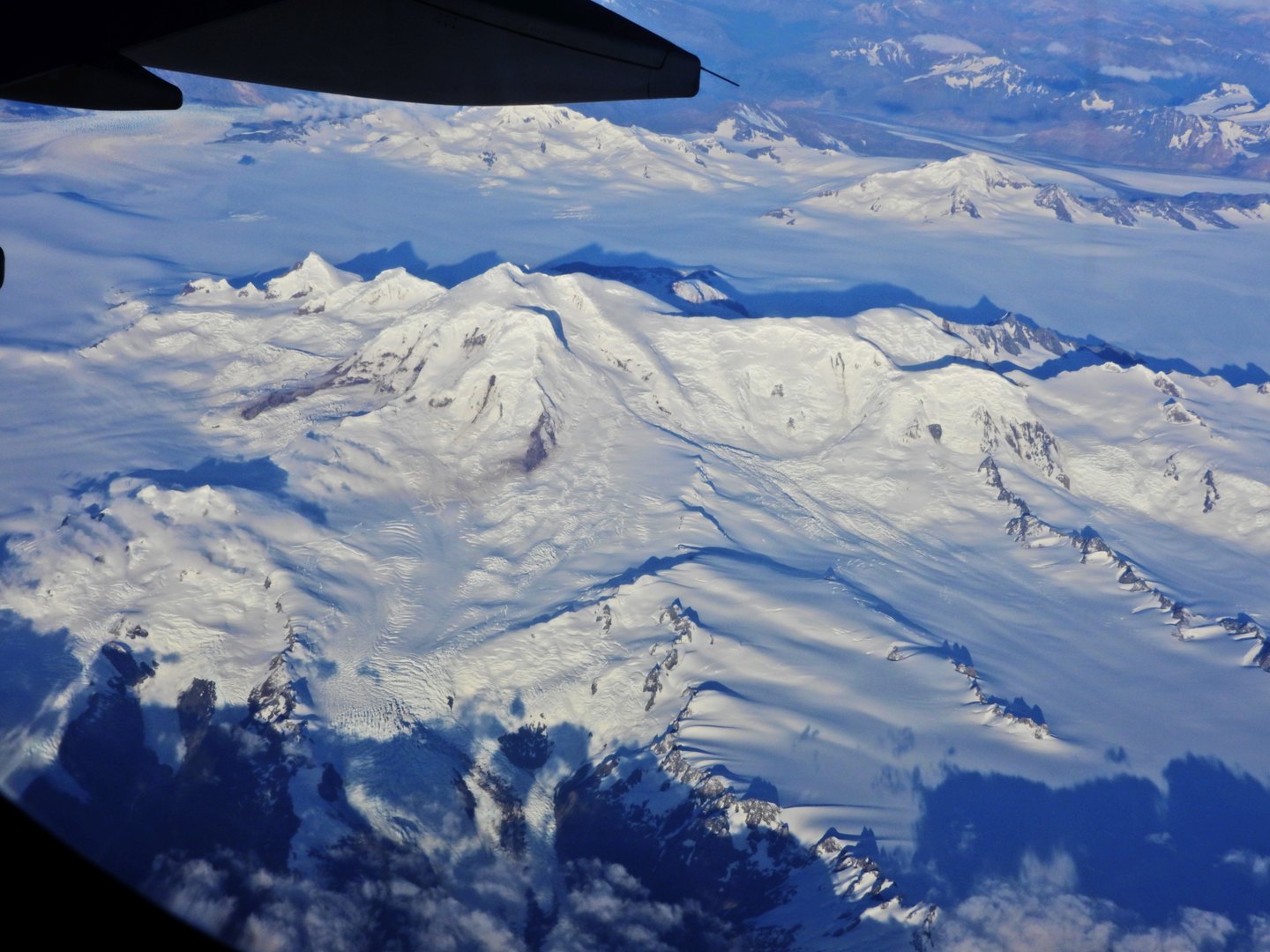
Craters and edifice geometry
Lautaro has at least two crater-like structures: one below the summit toward the northwest and another on the northeast flank with a diameter of approximately one kilometer. Ice covers part of the edifice and makes delimiting its lower morphological features difficult. Aerial photographs taken over several decades of the twentieth century showed ash deposits on the ice surface, a record of eruptive phases preserved in accumulated snow.
Geological record in the moraines
The team of Motoki and colleagues studied volcanic materials recovered from the terminal moraines of Lautaro Glacier. Those fragments, transported by the ice from the volcanic edifice, allowed samples to be analyzed without direct access to the cone. The ash layers deposited on the ice field constitute a stratigraphic record separate from the moraine fragments. Motoki documents activity in 1959–1960 as a historically documented episode, without establishing it as the last in the eruptive sequence.
Volcanism and cryosphere
Lautaro's position above the ice field creates an interaction between volcanism and the cryosphere that is the subject of study from both volcanic geology and glaciology. The dacitic materials of the edifice, together with the deposits preserved in the moraines of the namesake glacier, constitute the primary record with which researchers reconstruct the volcano's history in a difficult-to-access environment.