
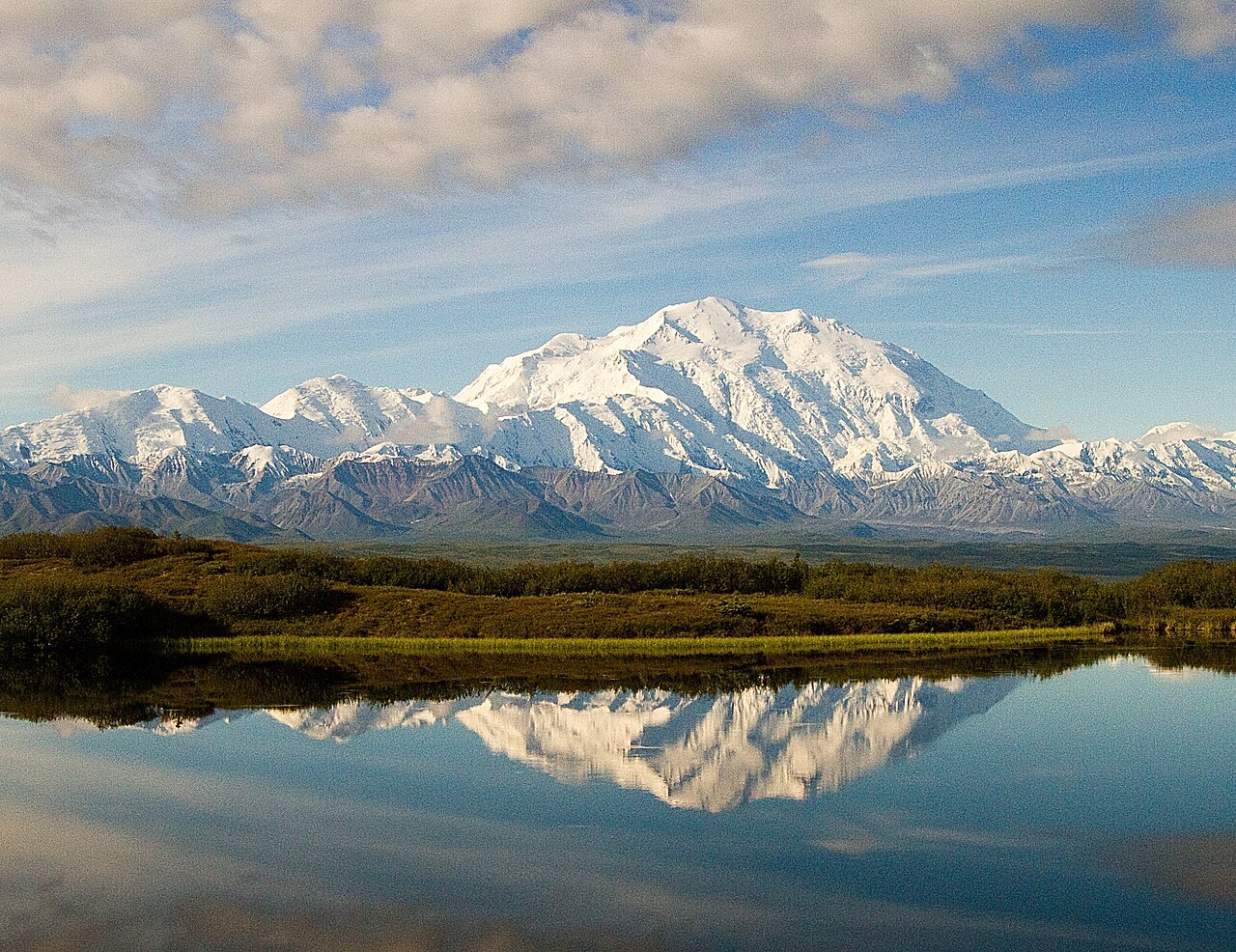
A Name With Deep Roots
The Koyukon Athabascan name Denali long predates any federal designation. The U.S. federal government officially adopted Denali in 2015, replacing the name Mount McKinley, which had been in federal use since 1917. In 2025, federal authorities reverted to Mount McKinley, though the surrounding protected area — Denali National Park and Preserve — retains the Athabascan name. The competing designations sit uneasily alongside each other, a reminder that place names encode histories that do not always move in one direction.
The 1913 South Summit Ascent
On 7 June 1913, Walter Harper became the first of four team members to step onto the higher south summit. Harry Karstens, Hudson Stuck, and Robert Tatum followed. The party had approached via the Muldrow Glacier, threading the great icefall before establishing a high camp in the basin between the north and south peaks. Conditions on the upper ridge demanded extensive step-cutting through rock and ice, a measure of how uncompromising the terrain above that basin proved to be.
The expedition's route and techniques belong to their historical moment. The NPS records the ascent as a landmark in the mountain's documented climbing history, not as a model for contemporary travel on the peak.
Measuring the Summit
For decades, the accepted summit elevation was 20,320 feet, a figure derived from surveys conducted using 1950s-era methods. In 2015, a GPS-based survey conducted by the USGS in partnership with NOAA's National Geodetic Survey and the University of Alaska Fairbanks established a revised official height of 20,310 feet (6,190 m). The ten-foot difference reflects an improvement in measurement precision, not any physical change in the mountain itself. The revision is a correction to the estimate, not evidence that Denali has diminished.