
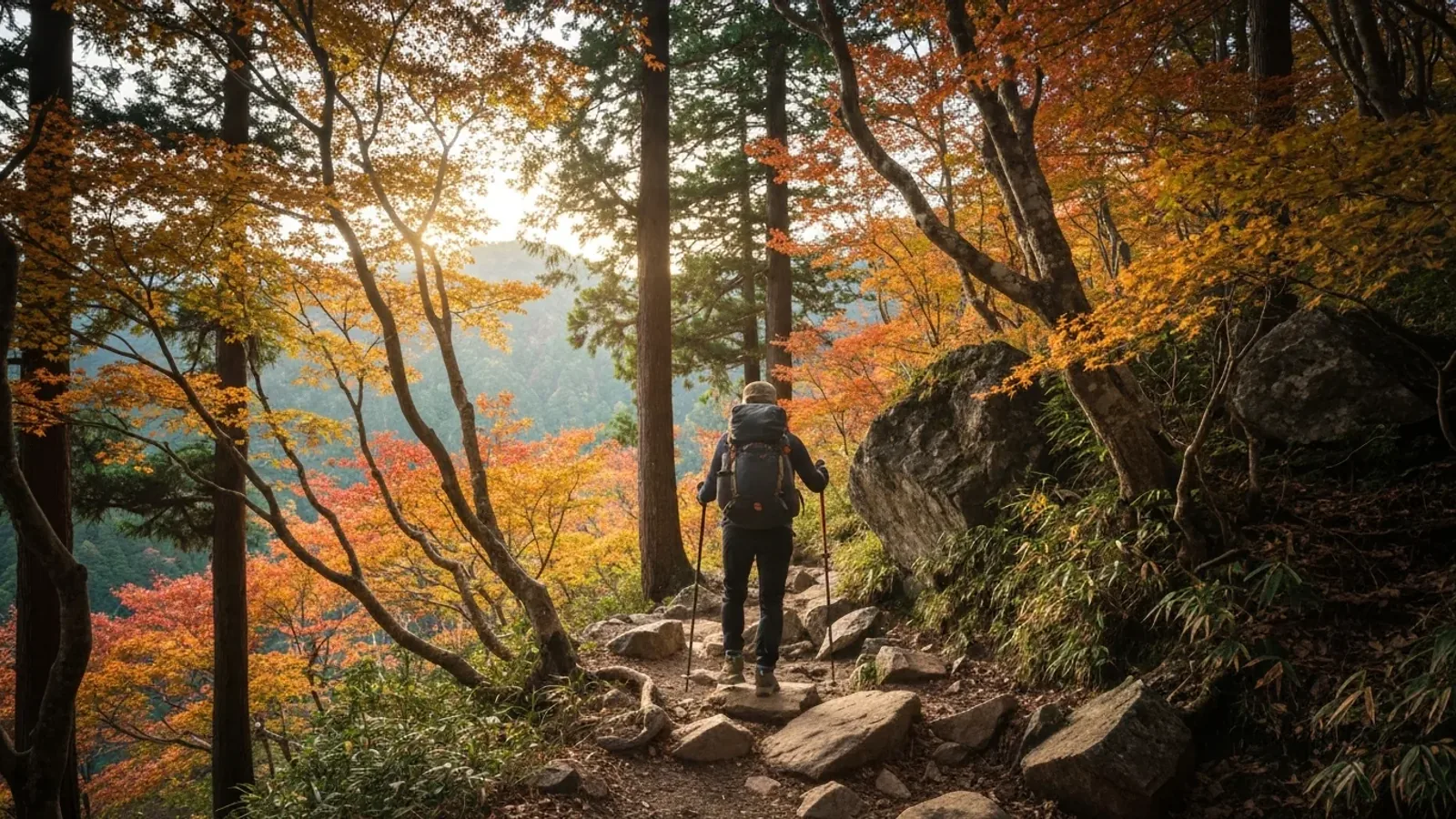
Trekking poles can help on slopes and when footing changes. This guide explains how they affect leg loading and balance, how to use them on climbs, and how to adjust and stow them.
Three ways poles can help
First, they can share some of the load on a descent. In experiments on downhill walking, poles reduced some forces at the knee. The effect depends on terrain and technique. Adjust your pace and stride rather than counting on poles to prevent injury.
Second, they can support balance. The tips add contact points, but they can slip on wet rock or loose stones. Place them lightly on stable ground. If wind or high water makes a section dangerous, consider turning back.
Third, they let you use your arms on climbs. Planting them close to your body can help coordinate your arms and legs. Fatigue depends on technique and slope, and using poles doesn't necessarily reduce energy expenditure.
Sharing the work between arms and legs
Your legs still support you when you use poles. They shift part of the load to your arms, so keep your footing stable and avoid putting your full weight on them.
Getting the length and technique right
Start by adjusting the length on adjustable poles. With a straight grip on level ground, use an elbow angle of about 90 degrees as a starting point. Try slightly shorter poles uphill and slightly longer ones downhill. Check the locks after every adjustment.
- Uphill: shorten them slightly so you can plant them close without lifting your shoulders.
- Level ground: with a straight grip, start with your elbow bent at about 90 degrees.
- Downhill: lengthen them slightly so you can place them ahead without fully extending your arms.
The right length depends on your build, terrain, and grip shape. Follow the instructions for adjustment limits and locks.
When walking, start by keeping your arms low and planting the poles close to your body. On flat ground, practise right foot with left pole and left foot with right pole. On slopes, adjust your stride and put the tips on stable ground before stepping.
When to put them away
Stow your poles where you need both hands, such as scrambles, chains, and ladders. Trying to hold a pole and a rock at the same time can make your grip less secure and increase the risk of a fall. Knowing when to stow poles matters as much as knowing how to use them.
Collapse or fold the poles and secure them in the pack's holders. Position the tips so they can't hit others or catch on branches. Use tip caps as directed locally to protect boardwalks and plants.
Using poles safely
Poles can share some leg loading, help with balance, and let you use your arms on climbs. Adjust length and stride to the terrain, and stop somewhere safe to stow them before a section that needs both hands.
If you are unsure, ask a more experienced hiker. Watching someone use poles on the trail can make the movement easier to learn.
In the Nordwand community, ask hikers who've walked the same mountain where they used their poles and where they put them away.