
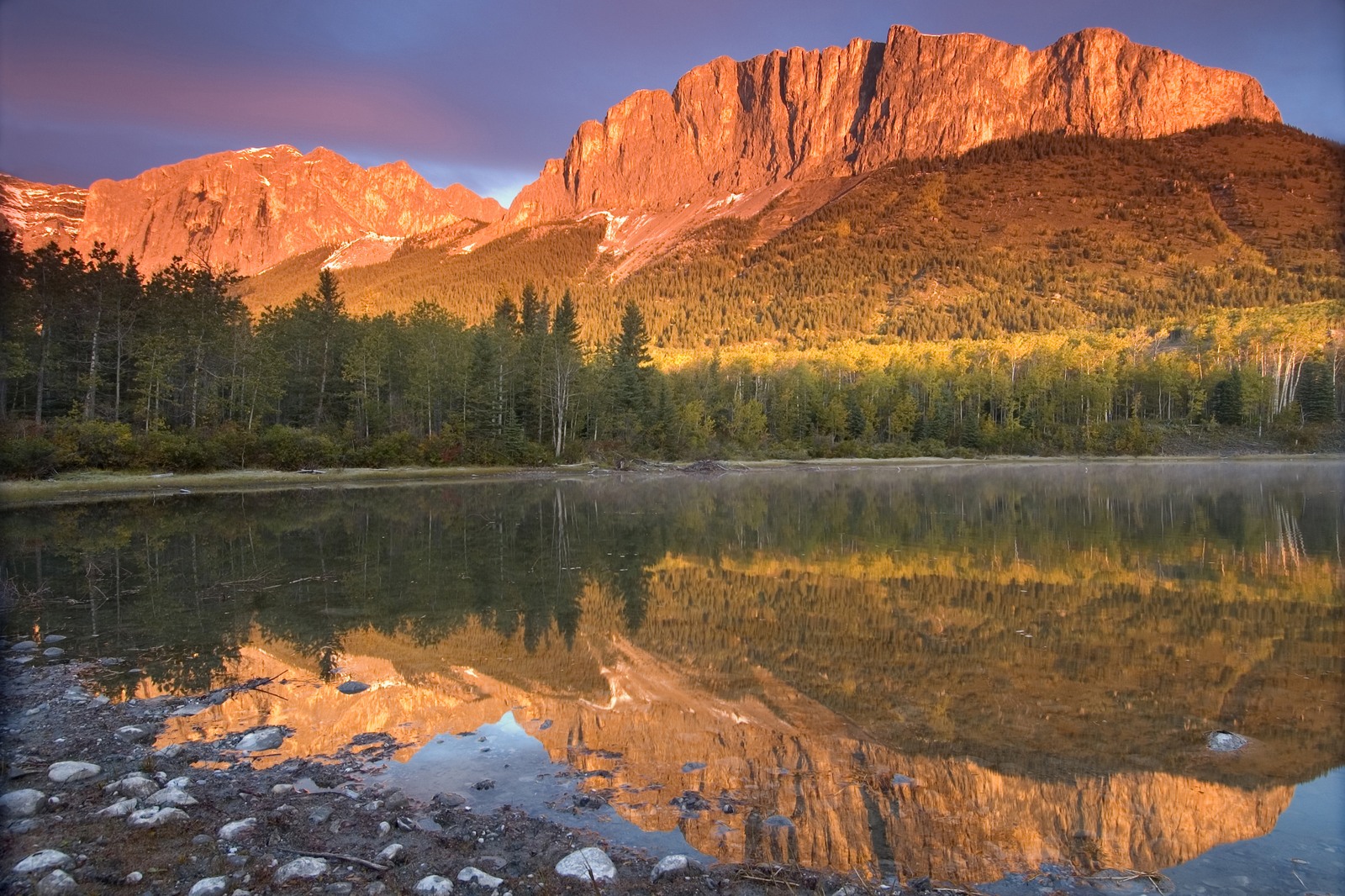
Îyâmnathka and Mount Laurie
Îyâmnathka is a Stoney Nakoda name for a flat-surfaced rock or mountain. Yamnuska is its familiar spelling in English. In 1961 Alberta named the mountain for John Lee Laurie (1900–1959), a Calgary teacher. On 5 December 1984 the province gave official recognition to the long-used Stoney Nakoda name in the dual form Mount Laurie (Îyâmnathka).
Older Rock Above Younger Rock
In 1886 the geologist R. G. McConnell documented thrust faults in the Canadian Rockies. The fault named after him is exposed below the cliff. Older carbonate rock lies above much younger beds of the Late Cretaceous Belly River Formation. The layers were pushed past one another after the younger sediment had already been laid down.
A Way up the South Face
In November 1952 Leo Grillmair, Hans Gmoser and Isabel Spreat made the first documented climb of the south face on the route now called Grillmair Chimneys. Grillmair recalled climbing in crepe-soled street shoes and finding an opening at the top of a chimney as snow began to fall.
Gmoser and Franz Döpfl opened the Calgary Route in 1953. In 1957 Gmoser, Grillmair and Heinz Kahl added Diretissima on the same wall.