
Tianzhu Peak and Ming-Dynasty Architectural Heritage
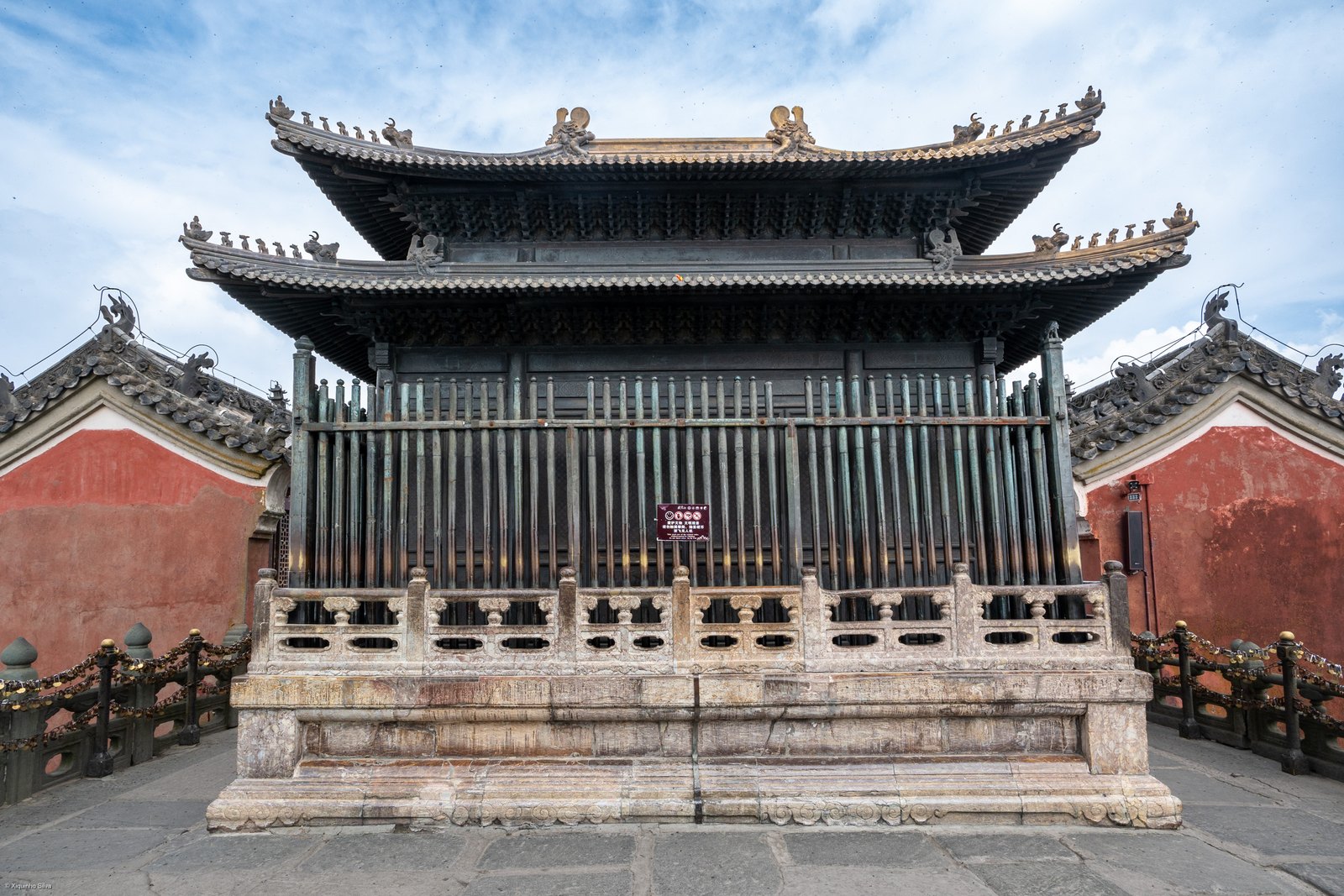
Tianzhu Peak is one of the alternative names for the Wudang Mountains as well as the location of their highest point. The Ming dynasty was the most ambitious period of construction in Wudang's architectural history, with palaces and temples distributed along the mountain's slopes and structures embedded even at the highest summits. The Golden Hall (金殿) at the top of Tianzhu Peak is a defining example of the concept of placing architecture within a precipitous summit, embodying the profound spatial relationship between Taoist architectural siting and mountain terrain.
The Wudang Mountains Ancient Building Complex was inscribed on the UNESCO World Heritage List in 1994. The heritage record spans multiple historical dynasties and presents a complete picture of how architecture forms an organic sequence across different elevations. With temples and halls distributed from the foothills through the middle slopes to the summits, the entire mountain becomes a layered ritual and religious space.
Taoist Tradition and Mountain Space
The Wudang Mountains have long been an important centre of Taoist cultivation and pilgrimage. The vertical sequence of their linked structures embodies the Taoist spatial concept of integrating natural mountain form into religious order. The Taoist tradition at this site predates the Ming dynasty, and there are records of construction or renovation of temples across multiple dynasties.
It should be noted that claims connecting the Wudang Mountains with the origins of Chinese martial arts are widely circulated in popular accounts, but existing historical sources are insufficient to confirm the specific origin narratives as historical fact. This distinction is important for understanding the site's historical heritage: what the documentary record amply supports is its architectural history and Taoist function, not specific historical assertions about martial arts origins.
Mountain Geography and Elevation Record
The Wudang Mountains lie in Shiyan in northwestern Hubei Province, in a mountain zone extending eastward from the Qinling–Daba ranges. The elevation of 1,612.1 metres for Tianzhu Peak derives from an official elevation announcement jointly published by the National Bureau of Surveying and Mapping and the Ministry of Construction in 2007, and is the authoritative measured value on record.
The pronounced relief of the mountain terrain gives each elevation zone its own character as a setting for architecture. From the foothills to the summit, the vertical range provides varied topographic support for the architectural complex and imparts the distinctively mountainous character that sets Wudang apart from Taoist sites on level ground.