
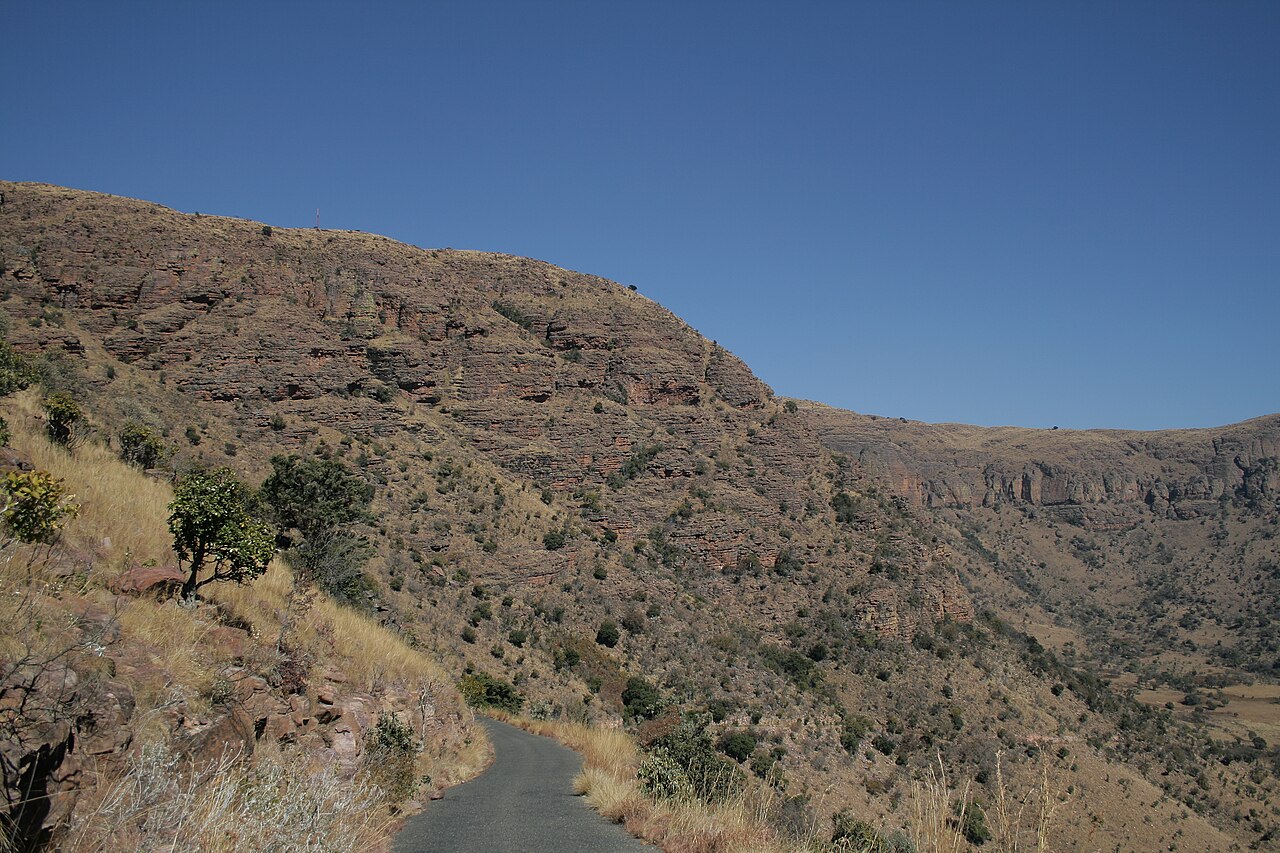
Sandstone Terrain and Savanna Soils
The escarpments are formed from ancient sandstone, and the porous, sandy soils derived from this geology give the Waterberg its characteristic open woodland cover. Savanna trees and grasses adapted to low-nutrient, well-drained ground define the vegetation across the upland surface, distinguishing the range from the clay-heavy soils of adjacent lowland areas in Limpopo.
Rivers and Regional Water Catchment
UNESCO's Man and the Biosphere documentation identifies the Waterberg as a significant regional water store. Rivers draining the biosphere carry runoff from the sandstone uplands into the broader Limpopo system, supplying water to surrounding communities and ecosystems. The catchment role of the range is a defining characteristic noted in both the UNESCO nomination and the Department of Forestry, Fisheries and the Environment's reserve records.
Rock Shelter Records and Human Presence
San rock art is documented within the Waterberg, preserved in sandstone shelters across the escarpments. UNESCO's programme records this art alongside evidence of extended human occupation of the upland terrain. The rock shelters represent a layered cultural record, with the paintings reflecting San knowledge and practice accumulated over a long period of habitation in this savanna landscape.