
One island, many edifices
The structure of Vulcano is not reducible to a single eruptive apparatus. The island is the result of a long succession of events that have stacked distinct calderas and cones one upon another. The La Fossa cone, the most recent and morphologically recognisable, developed within a multi-phase caldera, giving the landscape that funnel shape which dominates the visual reading of the island. Monte Aria, at approximately 500 metres, is instead the island's highest point, and the two elevations should neither be confused nor conflated.
The Vulcanian type and the 1888–1890 eruption
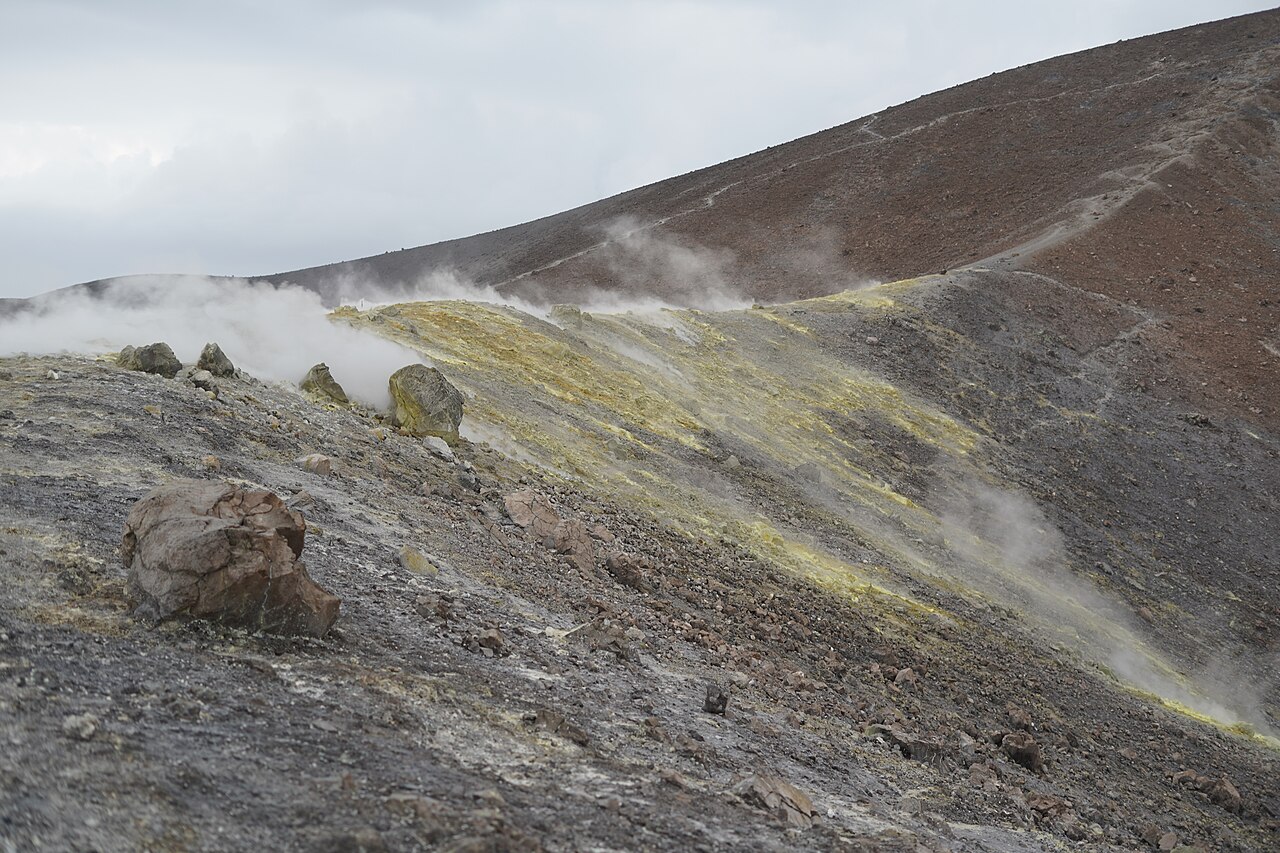
Between 1888 and 1890 the La Fossa crater was the site of an eruption whose characteristics have entered the international volcanological classification: violent and discontinuous explosions, emission of dense ash, and the ejection of breadcrust bombs — lava fragments whose surface is fractured by rapid degassing. The Istituto Nazionale di Geofisica e Vulcanologia describes this eruptive style as the model that gave its name to the Vulcanian type, making Vulcano a taxonomic reference point for the discipline. Today active fumaroles characterise the post-eruptive landscape and attest to the continuing hydrothermal activity beneath the surface.
Hiera, Hephaestus, Vulcano: a genealogy of the name
The INGV documents two strands of ancient tradition that overlapped in the history of the name. In the Greek tradition the island was called Hiera — sacred — and identified with the underground forge of Hephaestus, god of fire and metallurgy: a mythic reading of the smoke and heat rising from its depths. In the Roman tradition the place became Vulcano, residence of the Latin god of the same name. From this proper name, and from the eruptions that had made it famous in antiquity, the generic term used today to designate all the volcanoes on the planet gradually spread.
The Aeolian Islands as a whole were inscribed on the UNESCO World Heritage List in 2000, a recognition that affirms their geological and volcanological significance on a global scale.