
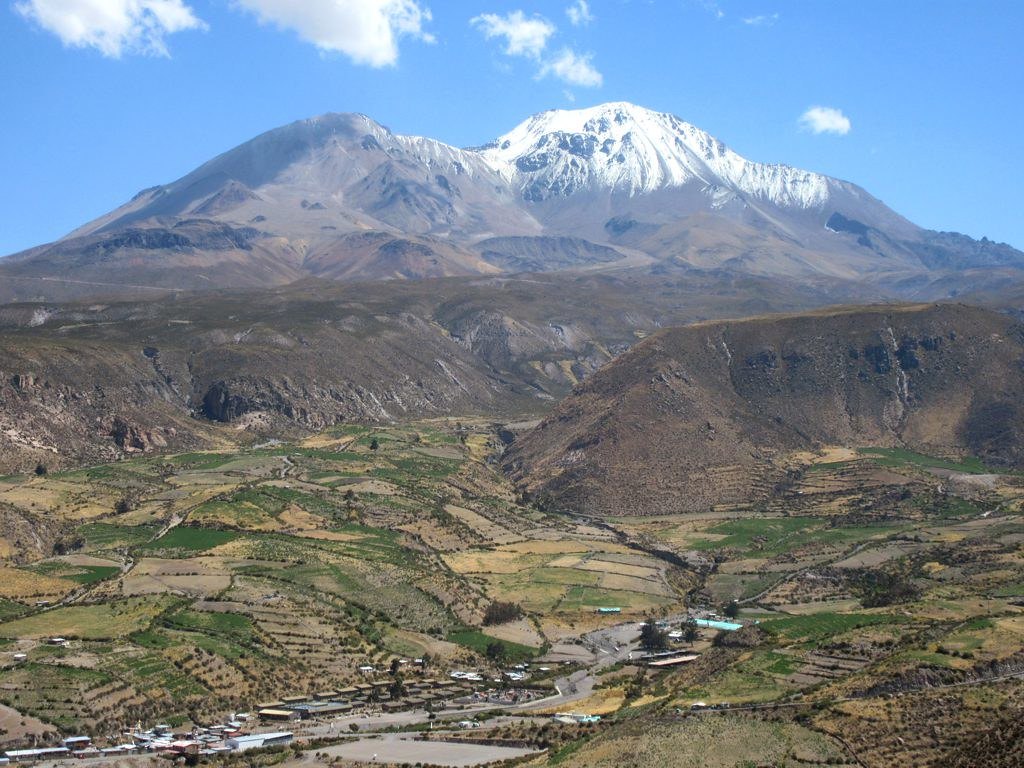
Sector collapses and the deposit beneath Putre
Geomorphological studies recognise at least three large sector collapses in the history of Taapaca, events that released masses of rock and generated avalanche deposits on the flanks and piedmont. The youngest deposit in that group underlies Putre, the volcanic material on which the town stands.
The Putre unit and activity over the past millennia
The so-called Putre unit corresponds to a phase of activity that began approximately 9,000 years ago. During this phase the volcano produced dome growth, block-and-ash flows, and lahars that modified the surrounding relief. The youngest evidence described in the Smithsonian record is an ash layer dated to around 2,000 years ago.
Composition and position in the volcanic arc
Taapaca has an andesitic main body with dacite domes crowning the edifice. Its position west of the main Andean chain places it outside the typical alignment of arc volcanoes in northern Chile.