
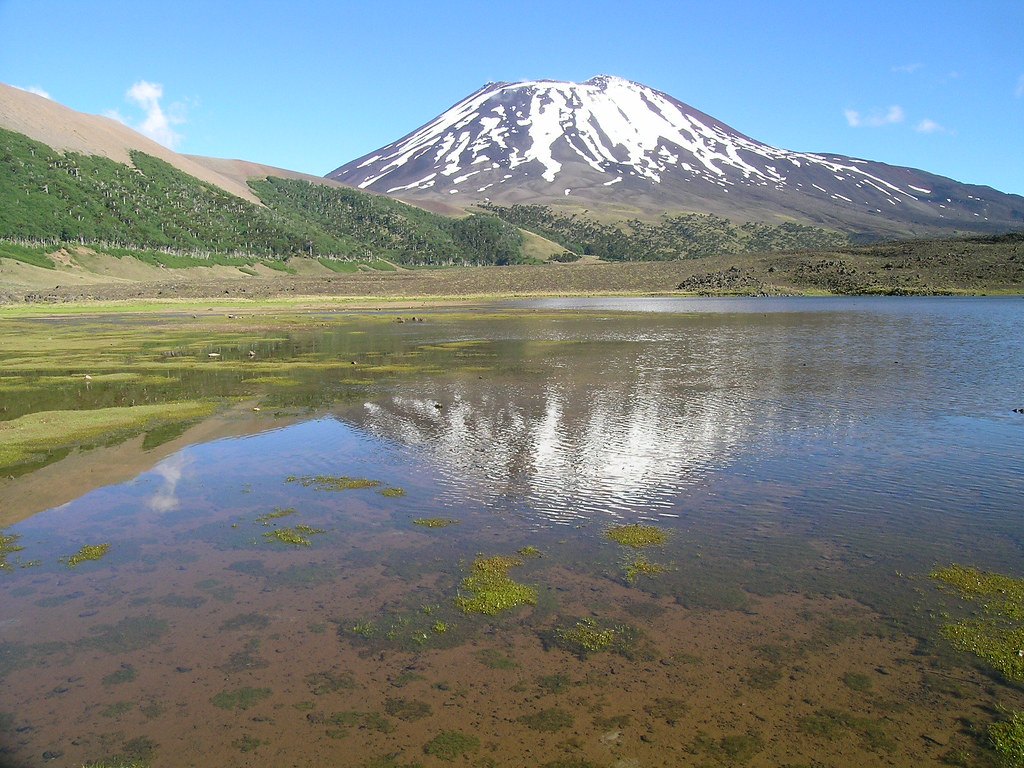
Navidad cone and the 1988 eruption
On 25 December 1988 a flank eruption began that built Navidad cone, a geomorphological feature distinct from the stratovolcano. The cone lies today within the Nalcas National Reserve, at the foot of the stratovolcano.
The 1988–1990 lava flows and their effects
The eruptive sequence lasted approximately thirteen months. Lava flows advanced some ten kilometres down the valley of the Río Lolco.
According to SERNAGEOMIN, fluorine-rich ash affected pastures and water sources, with documented consequences for livestock in the area.
Cordón Fisural Oriental
The Cordón Fisural Oriental is a fracture system oriented NE–SW that runs along the flanks of the volcano. The small satellite cones associated with this fracture network are evidence of volcanic activity outside the central crater.