
Overlapping craters and lava dome
Five overlapping craters truncate the upper part of the volcanic edifice. A lava dome cuts the rim of the northernmost crater, a configuration that reflects successive episodes of activity centred on the volcano's summit.
Lava field and avalanche deposit
On the western flank extends the Negriales lava field, andesitic to dacitic in composition and originating from a lateral vent of the edifice. To the southeast, deposits from a volcanic avalanche record a collapse of the structure. These materials provide researchers with a record of different eruptive processes.
Fumaroles, sulphur and study of the volcanic system
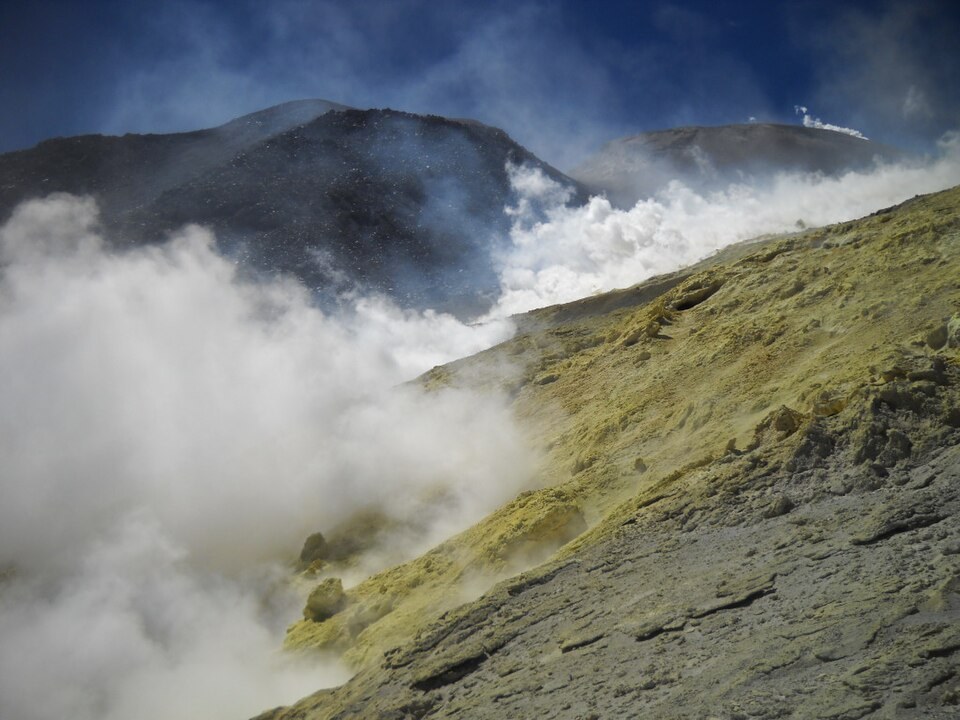
Fieldwork has documented fumaroles and yellow sulphur deposits in the upper zones. Analysis of the emitted gases and those deposits provides information about the fluids circulating within the volcanic system. The GVP gallery includes observations of sulphur melting and small flows that illustrate the surface dynamics of the edifice.