
Twentieth-century eruptions
In August 1971 the eruptions generated lahars — flows of water and volcanic sediment — that descended through the valleys. In August 1991 the most explosive phase projected ash to approximately 18 kilometres in height. Wind carried the material across Argentine Patagonia and toward the Atlantic, and the sulphur dioxide cloud was tracked by satellite.
2011 activity
In October 2011 a sequence of earthquakes accompanied by ash emissions was recorded on the southern and southeastern rim of the volcano. Sernageomin documented the monitoring response deployed during that episode.
Caldera and landscape
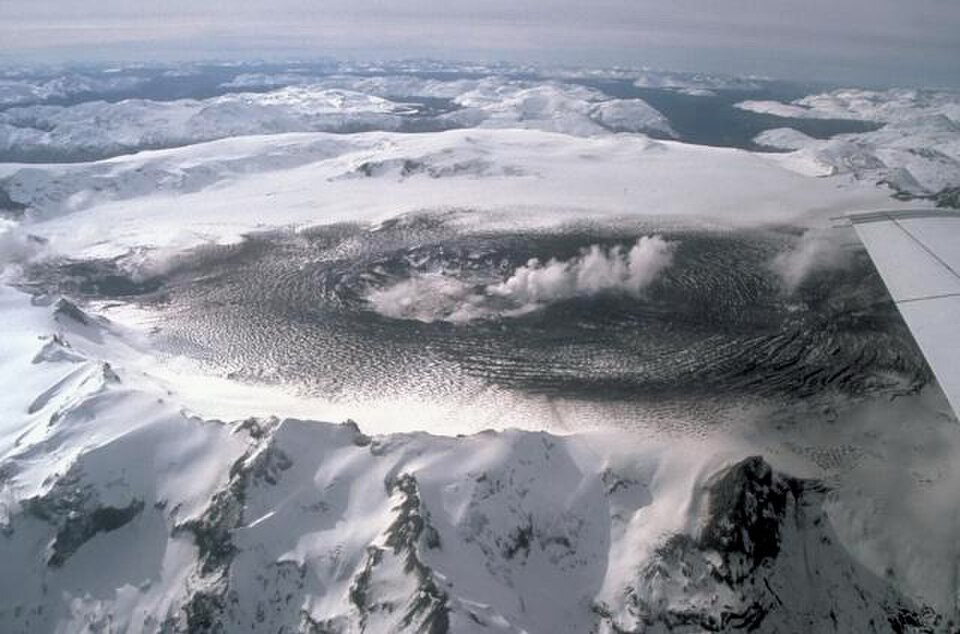
The caldera measures approximately 10 kilometres in diameter and contains a glacier whose meltwater feeds the Río Huemules, which flows to the northwest through the valley of the same name.