
Origin and structure of the caldera
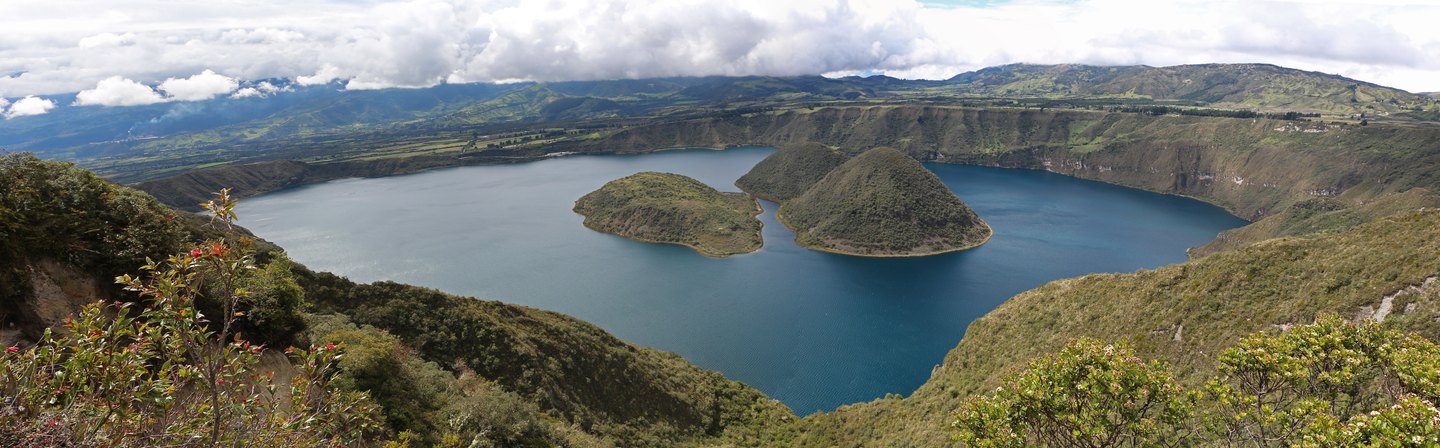
The Instituto Geofísico EPN and the Smithsonian Institution date a large explosive eruption approximately 3,100 years ago as the event that formed the caldera in its current configuration. That eruption left ash deposits and pyroclastic flows in the surrounding area. The caldera has a diameter of approximately three kilometres according to the Smithsonian and contains a steep-walled lake. The geological history of Cotacachi is described independently, although both systems share the Otavalo–Umpalá fracture zone, a structural feature that governs regional geodynamics.
Isla Wolf and Isla Yerovi and their domes
Two islands, Wolf and Yerovi, rise within the lake and together host a total of four volcanic domes. These structures are younger than the event that formed the caldera and record the activity that followed the collapse.
Lake geochemistry and system activity
Modern studies have measured gas emissions and analysed the chemical composition of the lake water. These observations characterise the geochemical behaviour of the system at the time of sampling and do not constitute forecasts of its future evolution. The combination of caldera, steep-walled lake, and interior domes forms a volcanic system with several documented records in northern Ecuador.