
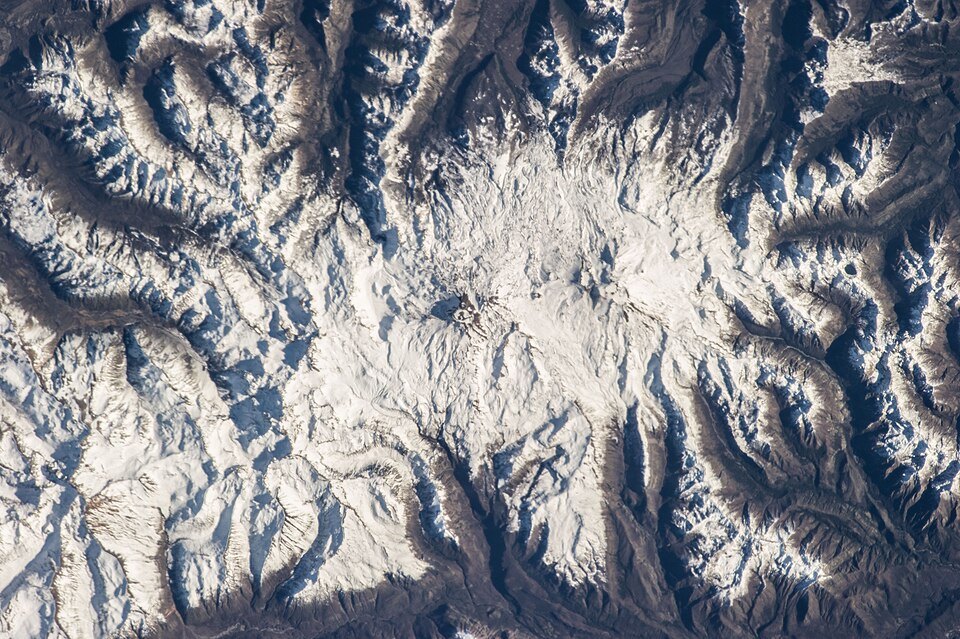
Structure of the massif
Cerro Blanco occupies the northwestern end of the complex and groups the highest relief. The Las Termas subcomplex extends to the southeast and encompasses the centers that have recorded eruptive activity over recent centuries. The compositional differences between the two sectors reflect distinct magmatic processes throughout the history of the massif.
Historical construction of the eruptive centers
In Las Termas, Volcán Nuevo began to form in 1906 and its main episode developed during the first half of the twentieth century. The Arrau center grew between 1973 and 1986, accumulating viscous lava around its conduit — a structure geologists call a dome.
The 2016–2022 cycle and Nicanor crater
The eruptive cycle from 2016 to 2022 concentrated its activity at Nicanor crater, within the Las Termas subcomplex, and produced new volcanic emissions and the formation of lava domes. This activity is independent of the relief of the Cerro Blanco subcomplex.