
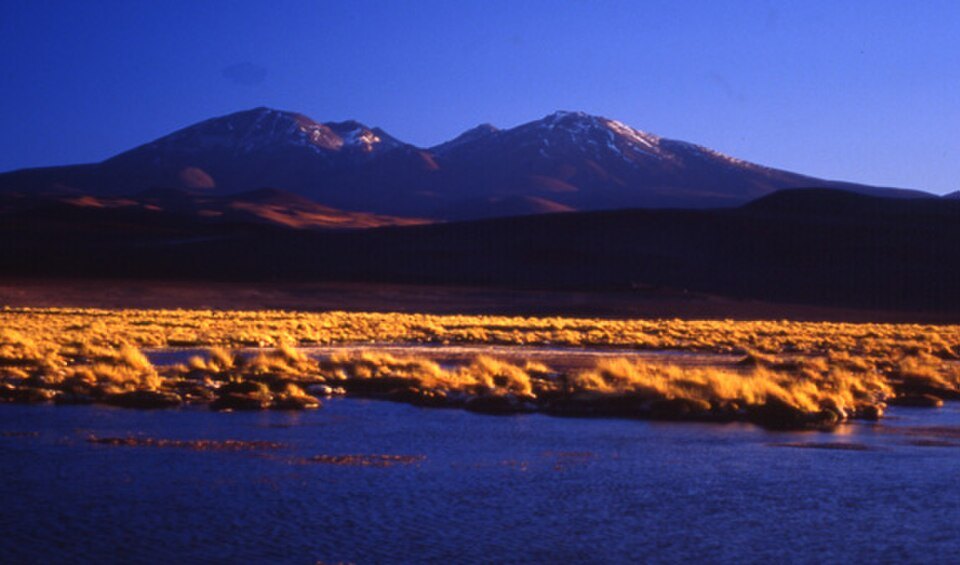
Architecture of the volcanic complex
According to data compiled by the Smithsonian from Richards, Ullrich and Kerrich (2006), the most recent rocks of the main edifice date to the early Pleistocene. The southwestern and western flanks host small single-episode centres that were active during later phases of the Pleistocene.
Volcanic activity and historical records
No Holocene eruptions are known at Antofalla. Reports of possible smoke in 1901 and 1911 were never confirmed as eruptions and remain a historical ambiguity with no support in the volcanic record.
Ice and rock deposits in the arid basin
The National Glacier Inventory mapped and visited mixed ice-and-rock deposits in the area, including those on the southeastern flank of the complex, within a highly arid basin. The report identifies some of these landforms as inactive. That classification refers to the ice-and-debris forms surveyed, not to the status of the volcano.