
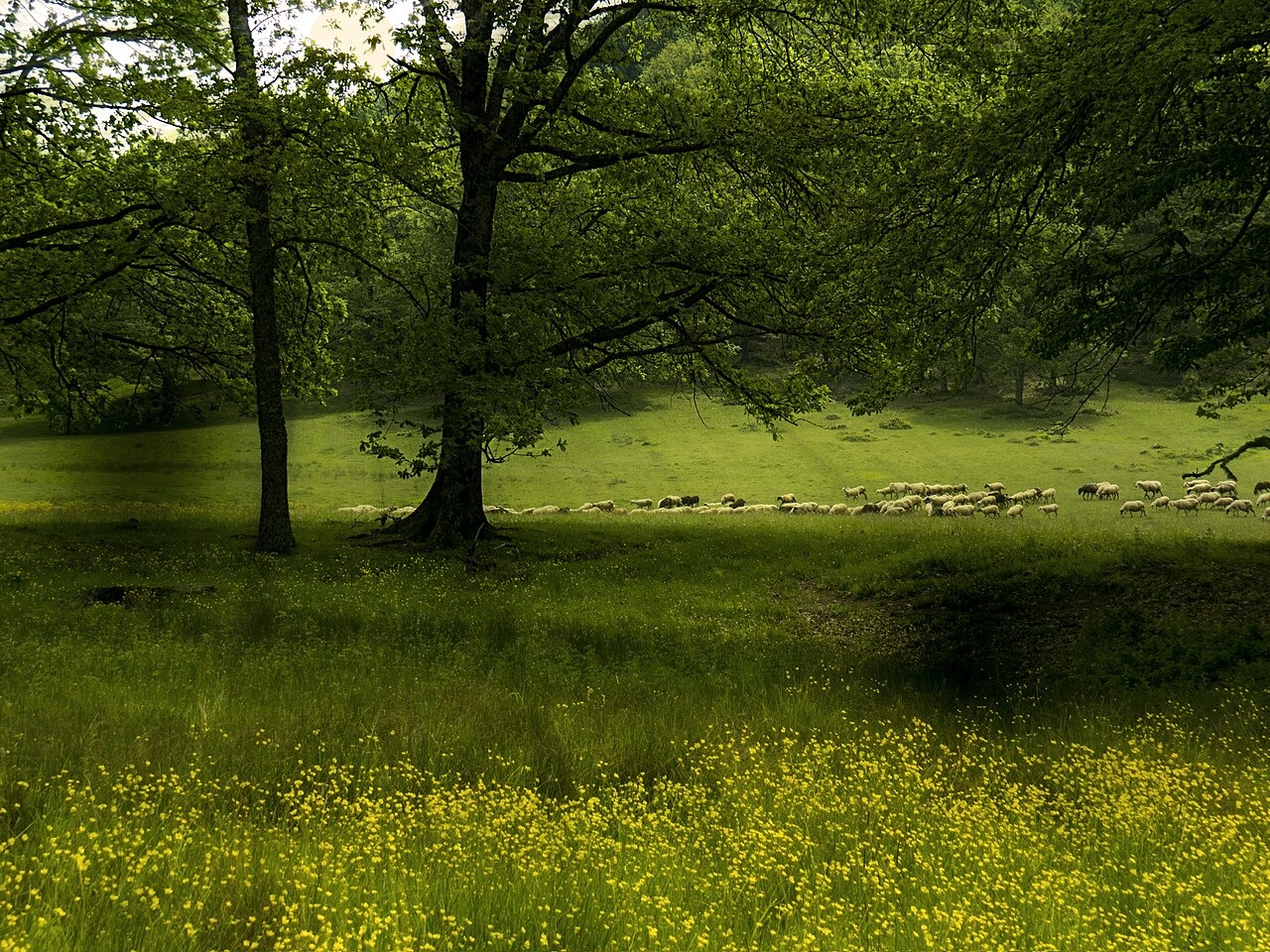
Landscape and Geological Setting
NECCA records Vegoritida Lake near the northern foothills of the massif and agricultural plains around Naousa and Veria to the east. To the south, the Aliakmonas gorge separates Vermio from the Pieria mountains. The Selliotis ravine divides the range internally. The massif includes limestone, flysch, schist, and local volcanic rocks across different sectors, and NECCA identifies beech and black pine as dominant tree cover.
Vascular Plant Inventory
Chochliouros and Georgiadis studied the vascular flora of Vermio during the 1994 and 1995 flowering seasons and published their checklist in 1997. The inventory documented 1,035 taxa in total, with 243 recorded for the range for the first time. The authors listed 117 Balkan endemic taxa and 34 Greek endemic taxa as separate categories. Herbarium specimens collected during the study are held at the Botanical Museum of the University of Patras.
Ancient Name and Literary Tradition
The name Bermion appears in Herodotus, Histories book 8 chapter 138, where the historian places the mountain above the gardens of Midas, describing roses said to bear sixty petals and associating the site with a Macedonian founding narrative. NECCA notes the continuity between the ancient name Bermion and the present name Vermio. The gardens and their roses belong to literary tradition as Herodotus recorded it.