
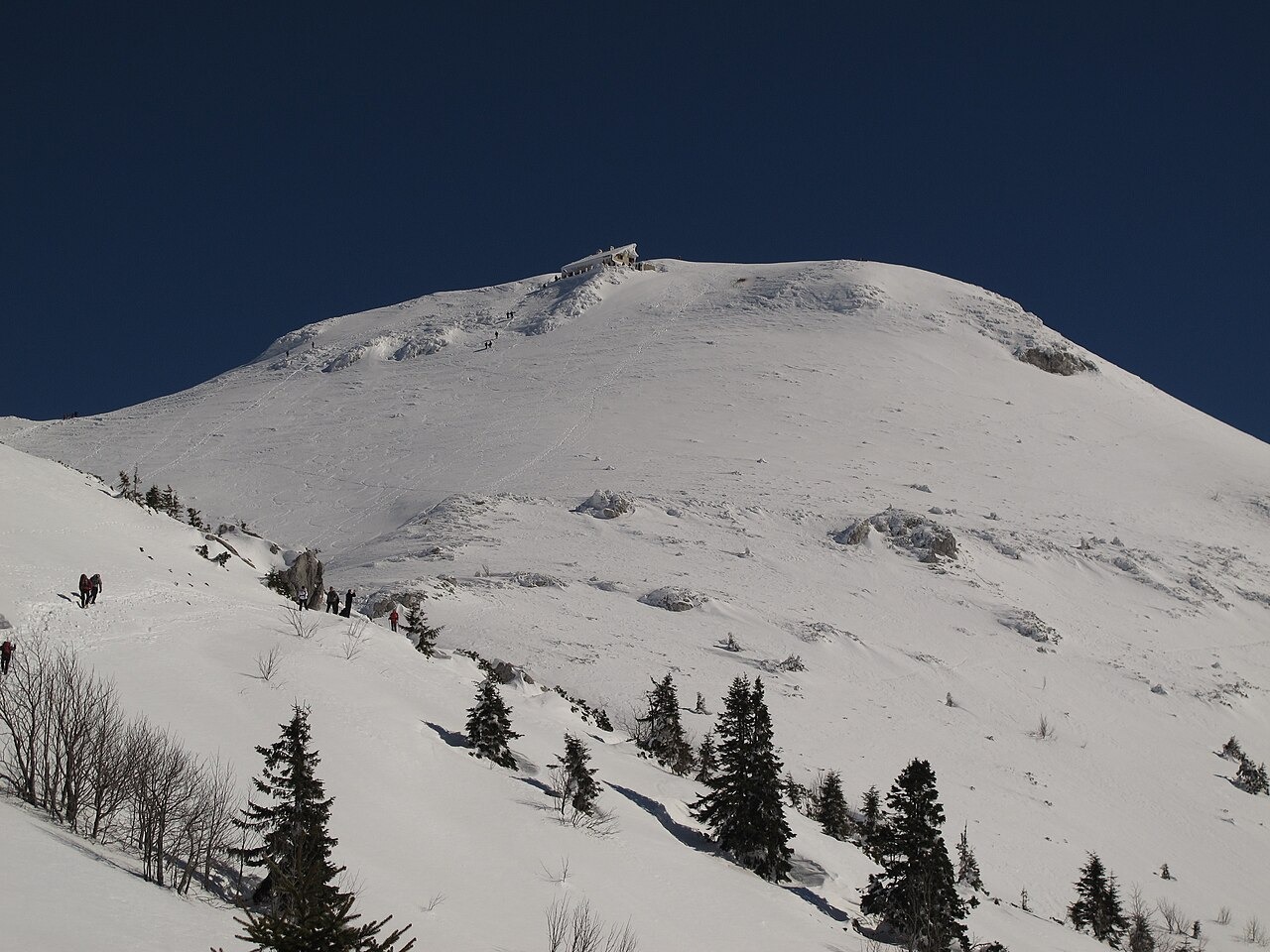
A Glaciokarst Landscape
University of Ljubljana researchers mapped deposits and landforms left when glaciers advanced across the plateau's Mesozoic limestone and dolostone. The mapping identified glaciokarst features, where glacial modification and carbonate dissolution act on the same surface. A closed depression partly filled with glacial sediment is one such feature. Karst drainage routes water underground, so the plateau retains few open streams. A 2024 publication reconstructed a former Snežnik ice field and modelled how moist Adriatic airflow contributed to glaciation-era precipitation.
Valvasor and the Seventeenth-Century Record
Written documentation of Veliki Snežnik traces to Johann Weikhard von Valvasor's 1689 work The Glory of the Duchy of Carniola, which recorded physical and cultural features of the Carniolan landscape.
The Snežnik-Ždrocle Beech Forest
The Snežnik-Ždrocle forest holds its own UNESCO World Heritage boundaries and forms part of the Ancient and Primeval Beech Forests of the Carpathians and Other Regions of Europe, a transnational designation spanning multiple countries.