
Naming and Official Recognition
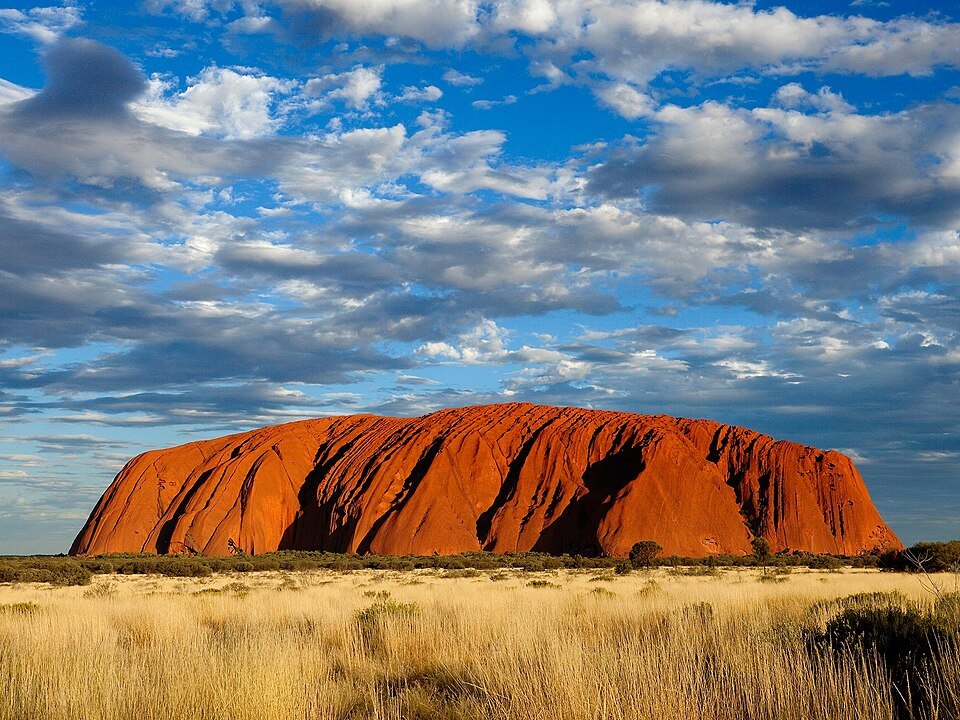
On 19 July 1873, the surveyor William Gosse sighted the formation and named it Ayers Rock in honour of Sir Henry Ayers, who was then Chief Secretary of South Australia. That name persisted in official usage for more than a century. In 1993, the Northern Territory adopted a dual naming policy, and on 15 December 1993 the feature became the first officially dual-named landmark in the Northern Territory, recorded as 'Ayers Rock / Uluru.' The order of those names was subsequently reversed — placing the Aboriginal name first — and the formation is now gazetted as Uluru / Ayers Rock.
The name Uluru comes from the Pitjantjatjara, Yankunytjatjara, and other local languages of the region. The formal reversal of name order was a deliberate act of recognition, not merely an administrative update, reflecting the precedence given to the traditional Aboriginal name over the colonial surveyor's designation.
European Exploration of the Western Desert
Aṉangu have known and lived in this country for tens of thousands of years. Non-Indigenous exploration of the region expanded in the 1870s, made possible by the construction of the Australian Overland Telegraph Line. In 1872, Ernest Giles became the first known non-Aboriginal person to sight Kata Tjuṯa, glimpsing the formation from near Kings Canyon. The following year, in 1873, William Gosse reached Uluṟu and named it Ayers Rock after Sir Henry Ayers, then Chief Secretary of South Australia. The two were separate expeditions, together establishing the first European cartographic record of both landmarks in what is now Uluṟu-Kata Tjuṯa National Park.
Geography and Setting
Uluru crops out near the centre of Australia, in the southern portion of the Northern Territory. Its monolithic character — a single mass of sandstone rising from a wide, flat plain — makes it one of the most visually arresting landforms on the continent. The formation lies approximately 25 km (16 mi) west of Kata Tjuta, the two landmarks forming the twin focal points of the national park that bears their combined names.