
Profile and Glacial Framing
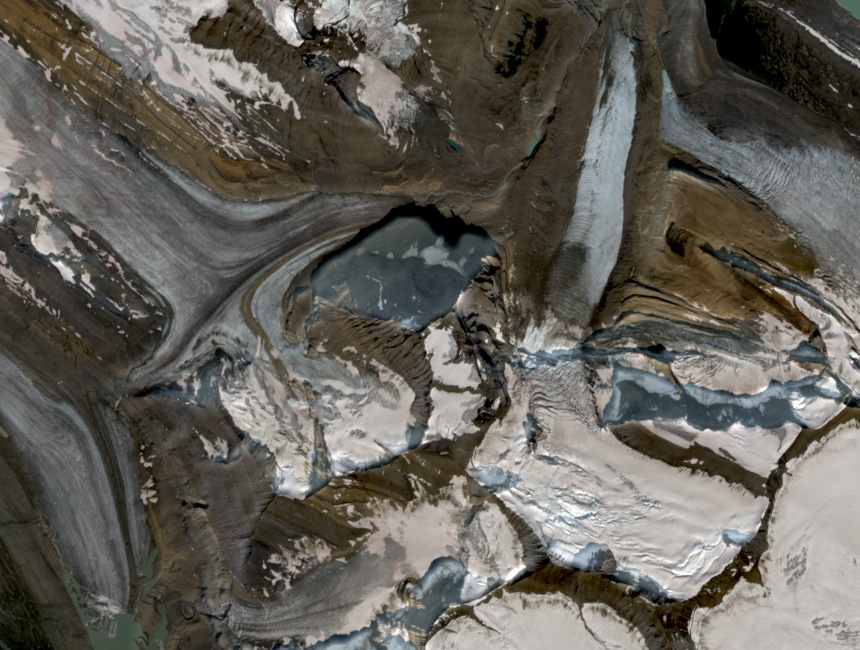
Tusk Peak rises as a rocky cone within the Clemenceau Icefield, with the Tusk Glacier on one side and the Duplicate Glacier on the other. The two glaciers bracket the summit directly, giving the peak a sculptural silhouette distinct from the more rounded high points elsewhere in the icefield.
Name and Survey Origin
The Interprovincial Boundary Survey named Tusk Peak in 1920, selecting the name in direct response to the summit's sharply pointed, tusk-shaped profile. The survey systematically recorded and named peaks along the Alberta–British Columbia boundary, applying descriptive names drawn from each feature's observed form.
First Documented Ascent
J. De Laittre, W.R. Maclaurin, and Alfred Ostheimer made the first recorded ascent in 1927 with guide Hans Fuhrer. Ostheimer was an active climber in the Canadian Rockies during the late 1920s; Fuhrer was a professional Alpine guide of Swiss background who worked extensively in the range.