
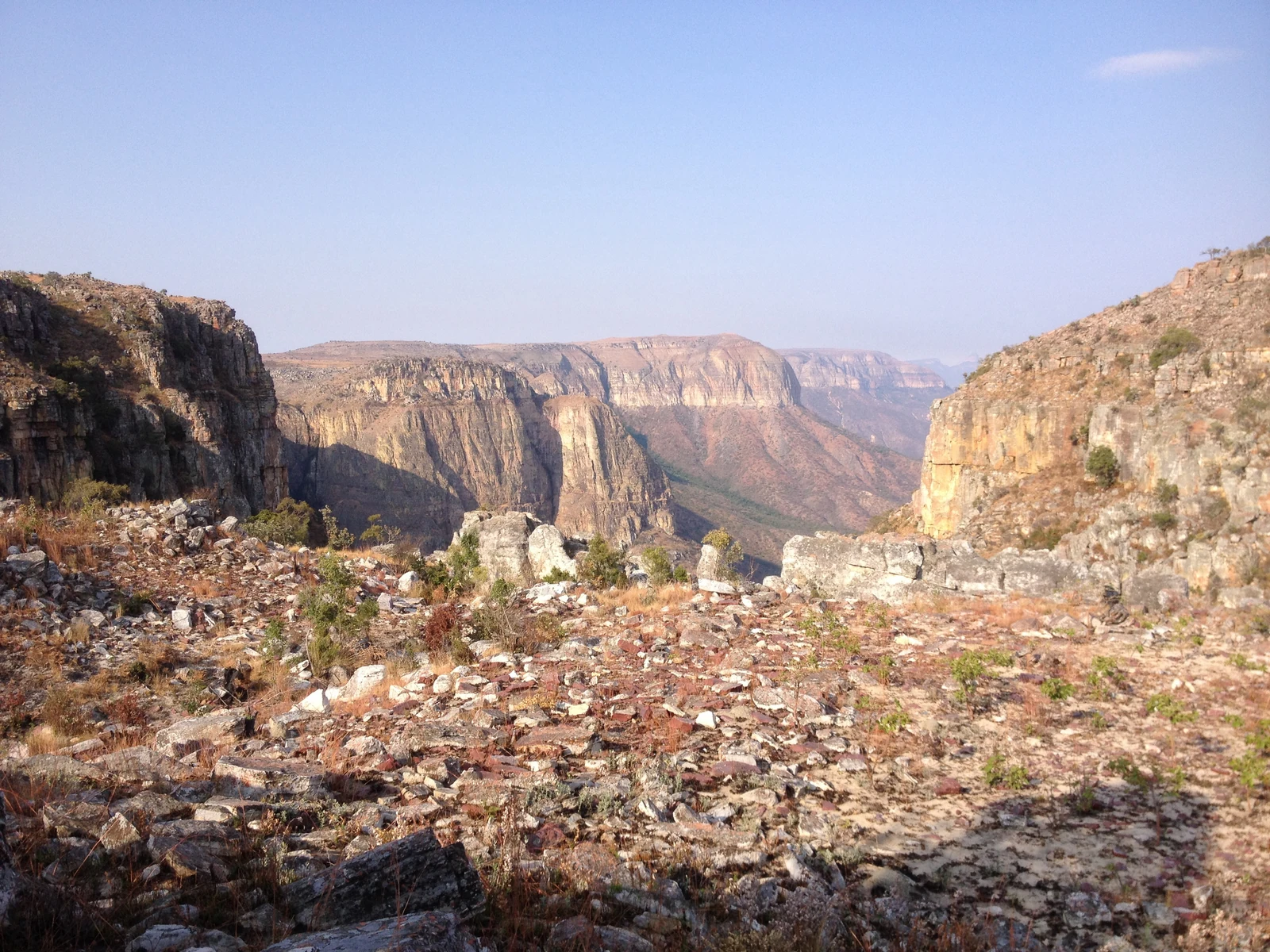
Geology and the Tundavala Formation
Geologists use the gap as the type locality of the Tundavala Formation, one of the units of the Chela Group. The formation is characterised by conglomerates at its base and by sandstones with pyroclastic intercalations that record ancient sedimentary and volcanic phases predating the opening of the gap itself. The geological map by Henriques and colleagues, published in 2015, distinguishes the two geosites of Tundavala and Leba. In some sectors of this plateau edge, the difference in elevation between the highlands and the lowlands is on the order of one thousand metres.
Oral Memory and Botany
The University of Coimbra study collected accounts from Ovahumbe communities of Quilengues who associate the opening of the gap with fertility and refer to the precipice by an expression translated by the study as the place where the world ends, underscoring the geosite's significance for local memory as well. On 15 October 2013, Goyder and Clark collected Stomatanthes tundavalaensis 1.4 km northeast of the gap, at an altitude of 2,216 m, on a rocky slope of the Bruco Formation among grasses and proteas. Hind and Goyder published the formal description of the species in 2014, and the type specimen is deposited at the Royal Botanic Gardens, Kew.
Climbing on the Upper Wall
The account signed by Nathan Cahill in the American Alpine Journal of 2024 describes two routes of approximately 35 metres on the upper part of the gap wall. Cahill reports that the team limited climbing to the first pitch at the top of the gap, after speaking with local residents about the community's memory of the civil war.