
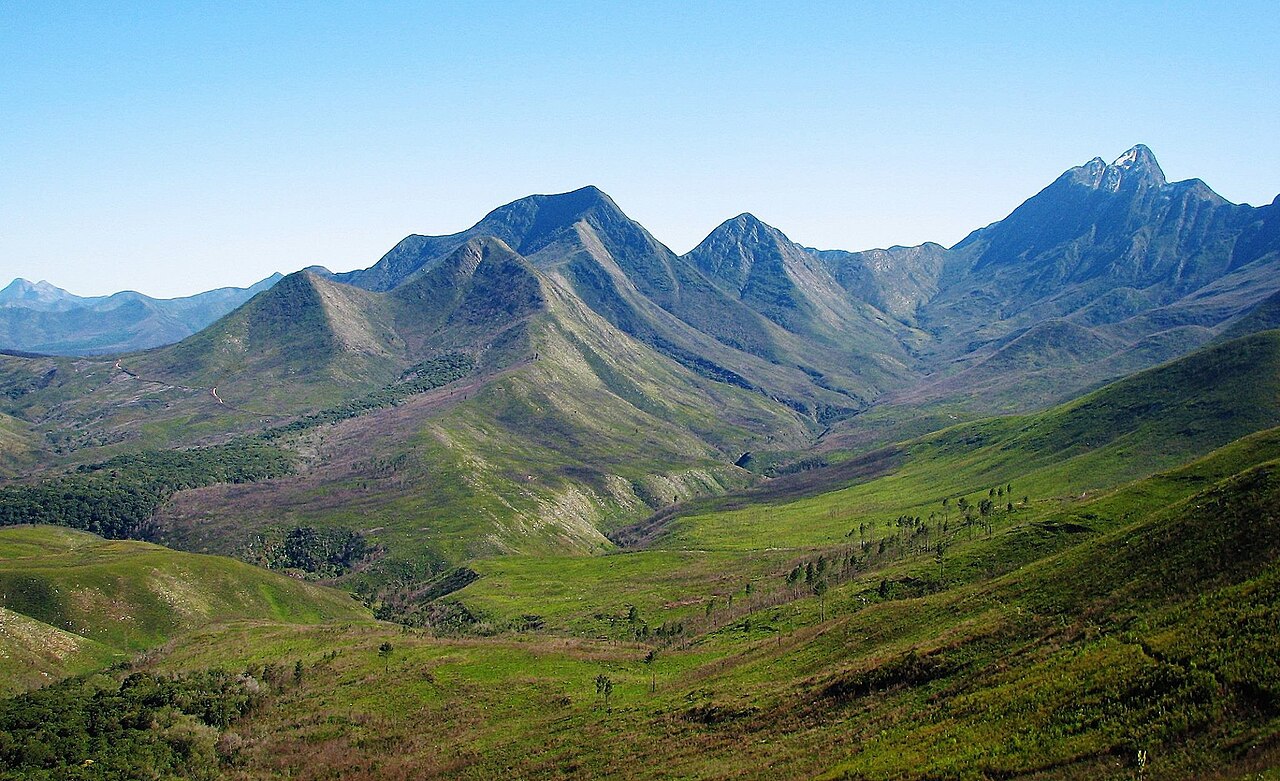
Sandstone Ridges and the Formosa Peak Catchment
Resistant Table Mountain sandstone gives the Tsitsikamma ridges their sharp profiles and low-nutrient soils. Formosa Peak, the range's highest summit, anchors a catchment system that channels rainfall into river systems feeding the surrounding lowlands. The Garden Route Biosphere Reserve State of Knowledge Report identifies this mountain catchment function as central to the hydrological health of the broader reserve.
Fynbos Cover and Fire-Driven Recovery
Fynbos shrubland clothes the upper slopes and is shaped by periodic fire. Field research published in the South African Journal of Science examined fire effects and vegetation recovery in the Tsitsikamma fynbos, finding that recovery trajectories vary across plant communities and burning conditions. The findings underline that no single fire regime applies uniformly across the range's vegetation mosaic.
Afrotemperate Forest in Sheltered Ravines
Sheltered ravines and south-facing slopes support patches of afrotemperate forest, a vegetation type that SANParks identifies as a defining element of the Garden Route's natural heritage. These forests exist alongside fynbos and coastal habitats as components of the broader landscape rather than as isolated features, and together they define the ecological character the Biosphere Reserve was established to protect.