
First Ascent, 12 June 1907
On 12 June 1907, Tom Longstaff, Karbir Burathoki, and the Brocherel brothers reached the summit. Their small, fast-moving party completed one of the era's highest verified ascents. Karbir Burathoki, whose background is documented in expedition accounts, played a central role alongside Longstaff and the Brocherel brothers throughout the climb.
Gurdial Singh, Roy Greenwood, and the 1951 Ascent
In 1951, Gurdial Singh and Roy Greenwood climbed Trisul. Singh later documented the expedition in his own account of how mountaineering developed in independent India, connecting the ascent to the growth of an Indian climbing tradition in the years following independence and recording his perspective on that history.
Three Summits, the West Ridge, and the 2012 Reconnaissance
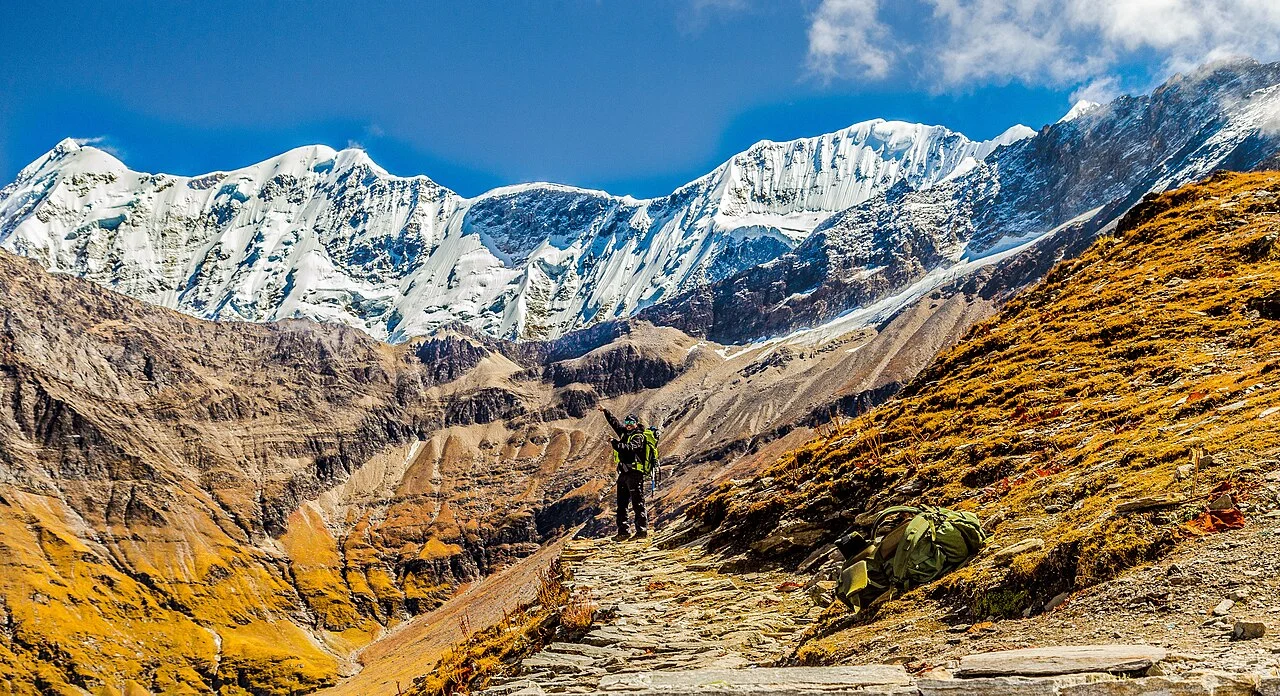
Gazetteer sources and Ashok Abbey associate the three aligned summits with Shiva's trident, giving Trisul its name. Abbey documents the west ridge's morphology in detail. A 2012 reconnaissance party described by Abbey reached the upper Raunthi Bank before turning back without completing the route to the summit.