
Surveying History
A historic USGS report lists the peak as a secondary unoccupied station at the head of Trapper Creek. Survey networks of that era established positions by measuring precise horizontal angles between conspicuous high points, allowing a summit to be incorporated into such a network without any surveying party ascending it.
Place-Name Origins
The Forest Service's place-name research finds no verified basis for the assumption that the peak or its creek took their name from trapping activity in the area. That local assumption is noted in Forest Service records but treated as unconfirmed.
Upper Mountain Ecology
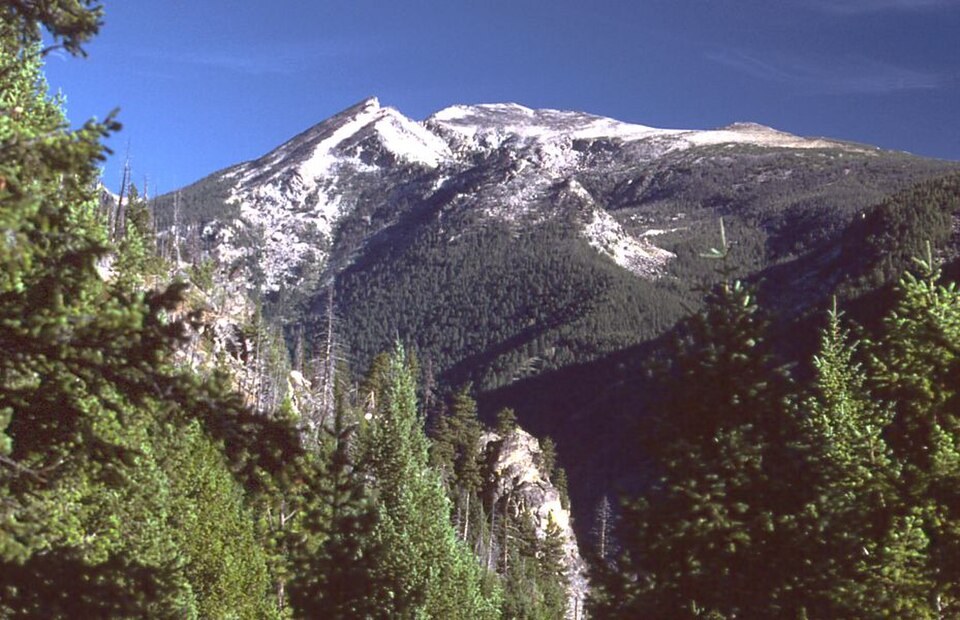
Forest Service silvics documentation identifies scattered, stunted subalpine larches (Larix lyallii) on Trapper Peak reaching around 3,020 m, near the upper limit of the species' elevational range documented in that source. The upper mountain otherwise features exposed granite and steep relief above the forested lower terrain.