
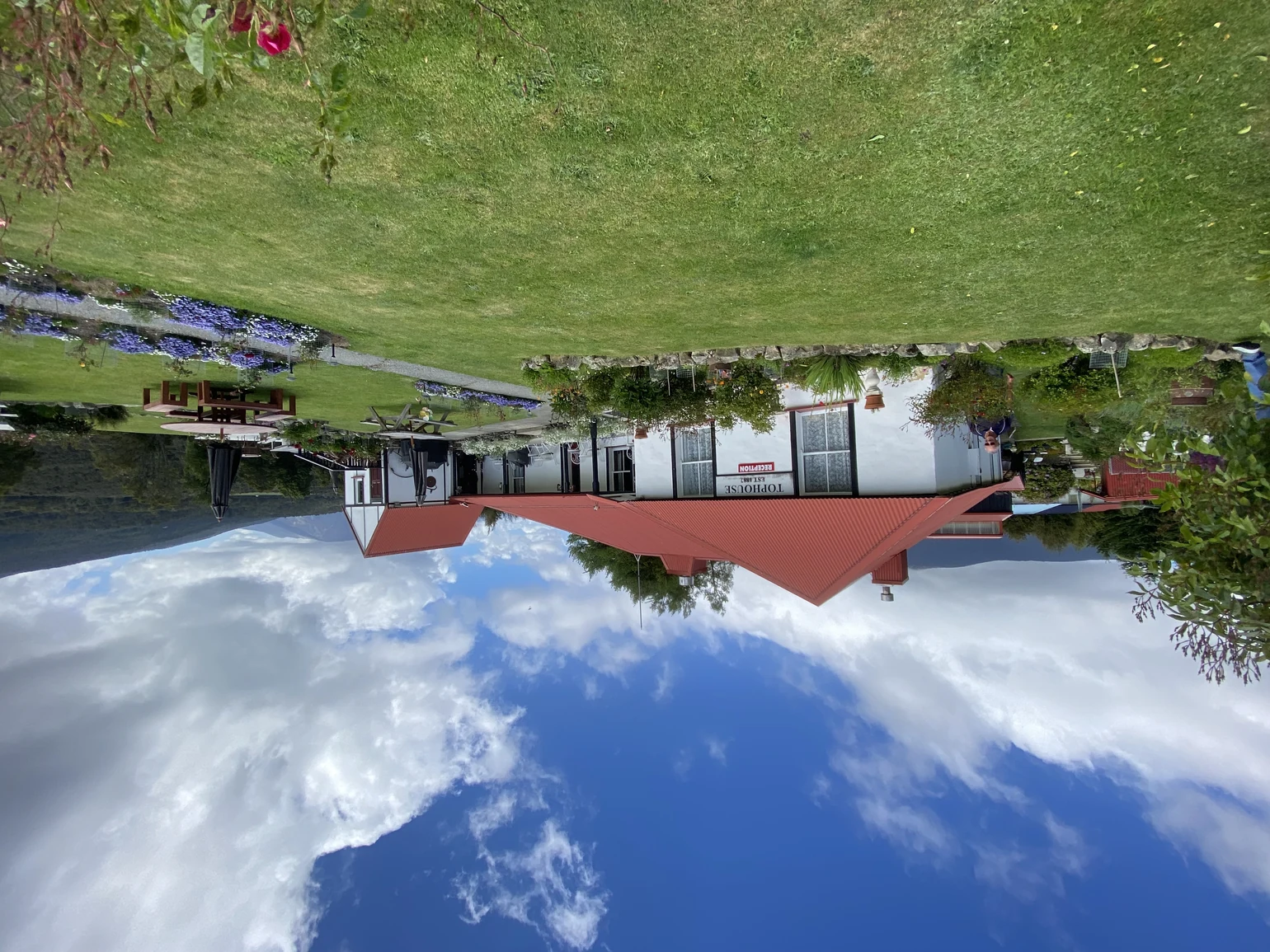
A Passage Between Three Valleys
Land Information New Zealand’s Raglan Run report records a Māori route from Tasman Bay via Lake Rotoiti, Tophouse and the upper Wairau to Canterbury. The Wairau valley also linked to a pounamu (greenstone) route through the Buller valley toward the West Coast. The surveyor J. S. Cotterell crossed Tophouse Pass in November 1842, one of the early documented European crossings.
The Wairau drains east from this part of the island, while the Buller runs west. The saddle and the neighbouring Motupiko valley made it possible for travellers from Nelson to reach inland country without crossing the higher crests of the Saint Arnaud Range.
Pastoral Settlement and the First Top House
Nathaniel Morse and Dr John Cooper drove a flock of sheep into the upper Wairau in November 1846. They called their homestead Top House because it stood higher and farther inland than others. It began taking in travellers by 1856. Adolph Wiesenhavern opened a hotel farther along the Wairau road in 1859. One view of the early settlement survives in R. H. Codrington’s wash drawing from 10 January 1863, held in the Alexander Turnbull Library.
Telegraph, Cob Construction, and Heritage Listing
A telegraph station opened in 1876 with lines serving the Wairau and Buller routes. The white house with the red roof in Schwede66’s 2024 photograph stands near that station. The Department of Conservation dates it to 1887 or 1888, when Nathaniel Longney commissioned builder Ned James to put up the earthen walls using a technique called cob.
A post office opened at the telegraph station in 1891, when Tophouse became the standard one-word spelling. The surviving inn entered the national heritage list as a Category 1 historic place on 13 December 1990. Its position near the road junction still shows what made the saddle valuable to people travelling between the valleys.