
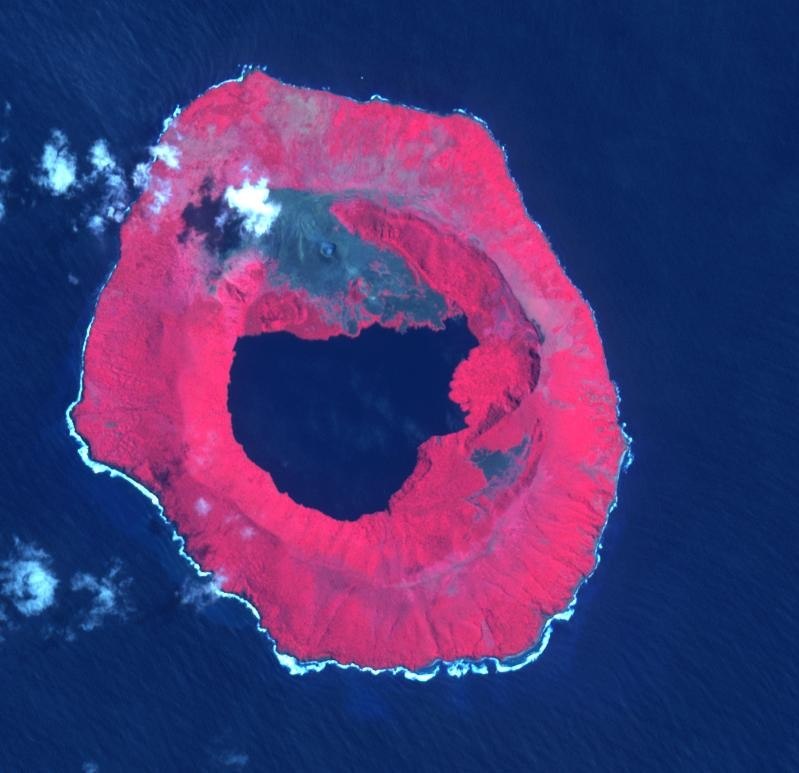
Caldera Structure and the 2000 Field Survey
A caldera is a large depression formed by the collapse of a volcanic edifice rather than by a simple explosive event, and Tofua's example measures roughly five kilometres across. The rim that defines the island's silhouette reaches about 515 metres, but the caldera floor is far lower — the lake within it lies at approximately 30 metres elevation, illustrating the considerable depth of the enclosed basin. The November 2000 survey distinguished three separate cone complexes in the northern portion of that floor, indicating that volcanic construction has continued well inside the original collapse structure.
Lofia Cone and Persistent Degassing
Lofia is a distinct cone that rises from the caldera interior rather than from the outer flanks of the island. The 2000 field report places it at around 380 metres in height — substantially below the caldera rim yet a significant constructional feature in its own right. The survey party observed persistent gas emissions from Lofia, a form of ongoing volcanic activity that falls short of an eruption but signals continued hydrothermal or magmatic heat at depth.
The Bounty Launch and the 1789 Passage
In 1789, after the mutiny aboard HMS Bounty, William Bligh and the men set adrift with him reached Tofua in the ship’s launch. The voyage notebook catalogued by Royal Museums Greenwich records the stop as part of their route to Timor.