
Name, Geography, and Survey Record
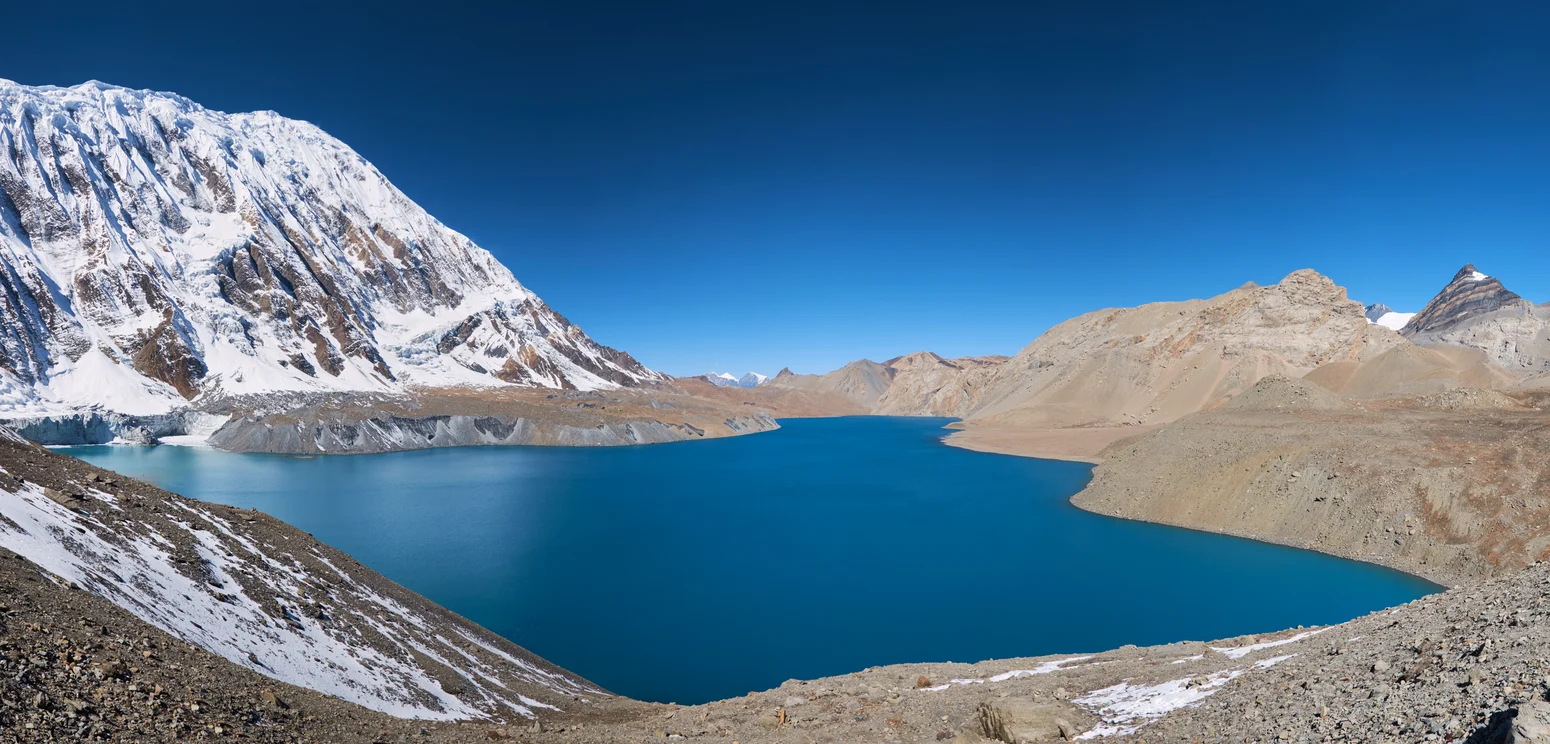
The name Tilicho derives from Tilicho Lake, which lies to the north of the peak rather than at or on the summit itself. Japanese expedition reports from 1979 refer to the peak as "Tilitso," a transliteration reflecting the lake's phonetic rendering in a different orthographic tradition, and that account explicitly notes how the lake at the northern foot lent its name to the mountain. The Government of Nepal records the summit elevation at 7,134 metres, a figure also carried by the Himalayan Database.
The peak sits within the Annapurna Himal, a massif known for the density and scale of its high summits. Tilicho's position on the Myagdi-Manang border places it in a topographically complex zone where deep river valleys cut through the range on multiple sides, shaping the approach corridors that expedition teams have historically used. The Marsyandi valley to the north provided the access corridor for the first ascent party.
Reconnaissance and the Path to First Ascent
A Japanese team carried out a reconnaissance of Tilicho Peak in autumn 1965, establishing early documentation of the mountain's structure and potential routes. Despite this early survey work, access restrictions closed the peak to climbing expeditions for over a decade. It was not until 1978, after those restrictions were lifted, that a French expedition led by Roger Emin was able to mount a full attempt, approaching the mountain via the Marsyandi valley.
The French team's work on the mountain was collective: Emin and his party established fixed ropes along the northwest shoulder as preparatory infrastructure for the summit push. On the day of the eventual summit bid, Emin himself broke trail for a significant portion of the ascent before turning back short of the top. Emanuel Schmutz, climbing the final leg alone, reached the summit at 3:15 in the afternoon on 10 October 1978 — the first recorded ascent of the peak. Schmutz's account, published in the American Alpine Journal, frames the achievement as a product of coordinated expedition effort culminating in a solo summit leg rather than an individual undertaking from the outset.
The Second Ascent and Japanese Return
A Japanese expedition returned to Tilicho Peak in spring 1979 and completed what the Himalayan Database and the American Alpine Journal record as the second ascent. That team approached via the north ridge, a line distinct from the northwest shoulder used by the French party the previous autumn. According to Yoshimi Yakushi's account, on 26 April Haruo Yamamoto, Takashi Araki, and Mingma Tenzing reached the summit first that day, followed by Yutaka Oe and Nawang Yonde. The 1979 account situates the second ascent within a short but layered history of international interest in the peak.
The two ascents in consecutive seasons — French in autumn 1978, Japanese in spring 1979 — represent the documented early climbing record of Tilicho Peak as preserved in expedition archives. The 1979 Japanese team initially moved supplies by ski sled across the frozen Tilicho Lake, but an avalanche broke the ice and forced the party to route around it, illustrating how the terrain directly shaped expedition logistics. The Nepal Department of Tourism's Facts and Figures 2025 report and the Himalayan Database together maintain the official record of ascents, while the American Alpine Journal accounts from those two seasons remain the primary narrative sources for the mountain's climbing history from that period.