
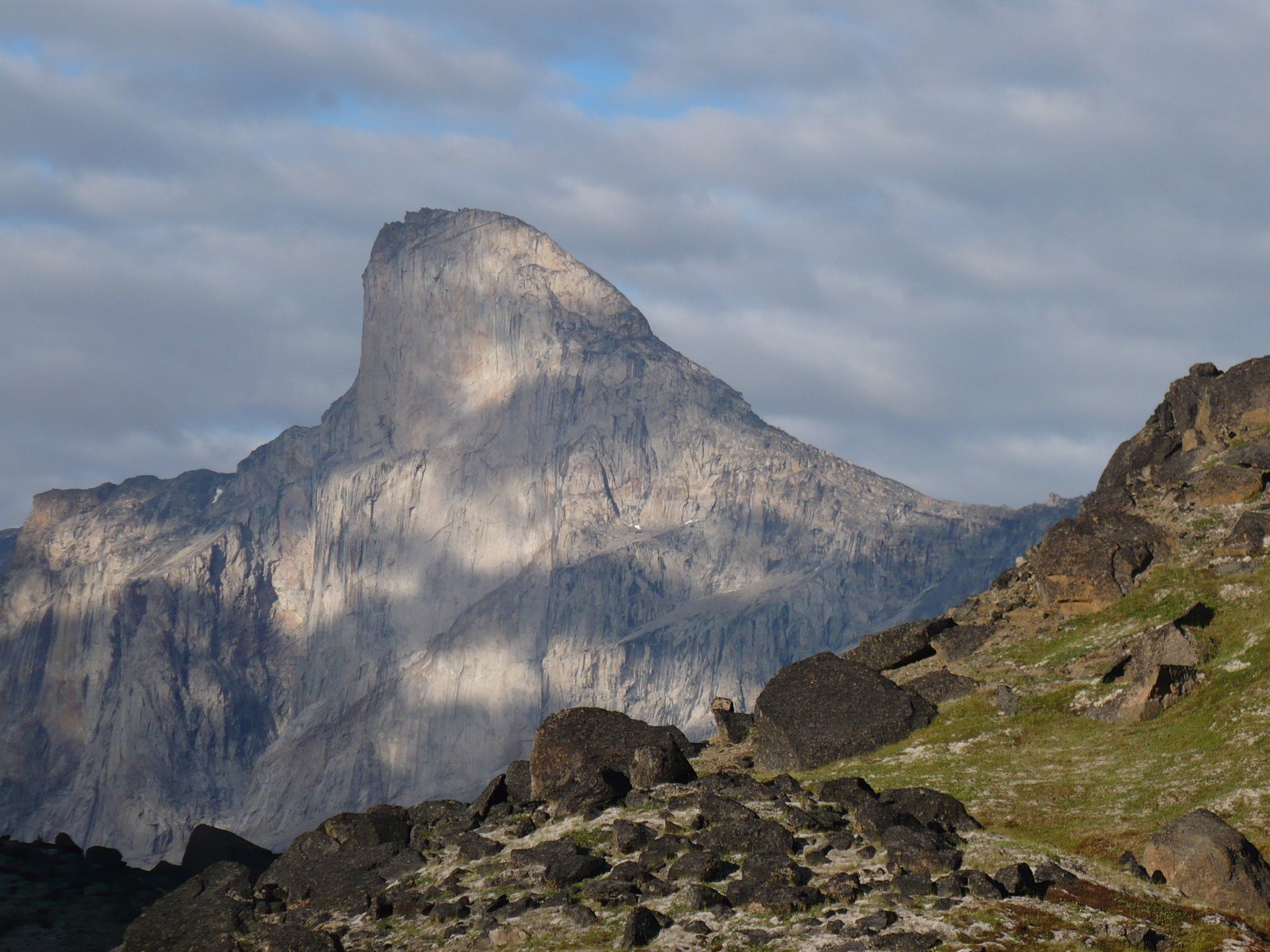
Landscape and Setting
Thor Peak stands within Auyuittuq National Park, Nunavut, above the glacially scoured corridor of Akshayuk Pass. The park's Inuktitut name means "the land that never melts," reflecting a polar arctic environment of permanent ice fields and exposed bedrock. The west face's overhanging geometry arises from the massif's structure rather than any single formation.
Climbing History
A 1984 Japanese party climbed a hybrid line combining the west face with the north ridge. The following year, a separate party committed to the Direct West Face, spending approximately a month on the wall before reaching the summit on June 21, 1985. The AAC record distinguishes these as separate routes.
West Face Conditions
The 1985 AAC first-person report documents weather and rockfall as persistent factors across the month-long campaign. Rockfall on large Arctic granite faces reflects frost action and thermal cycling, with no vegetated slopes to absorb dislodged material. The June 21 summit date anchors the account's documentary specificity.