
Reading the Landscape
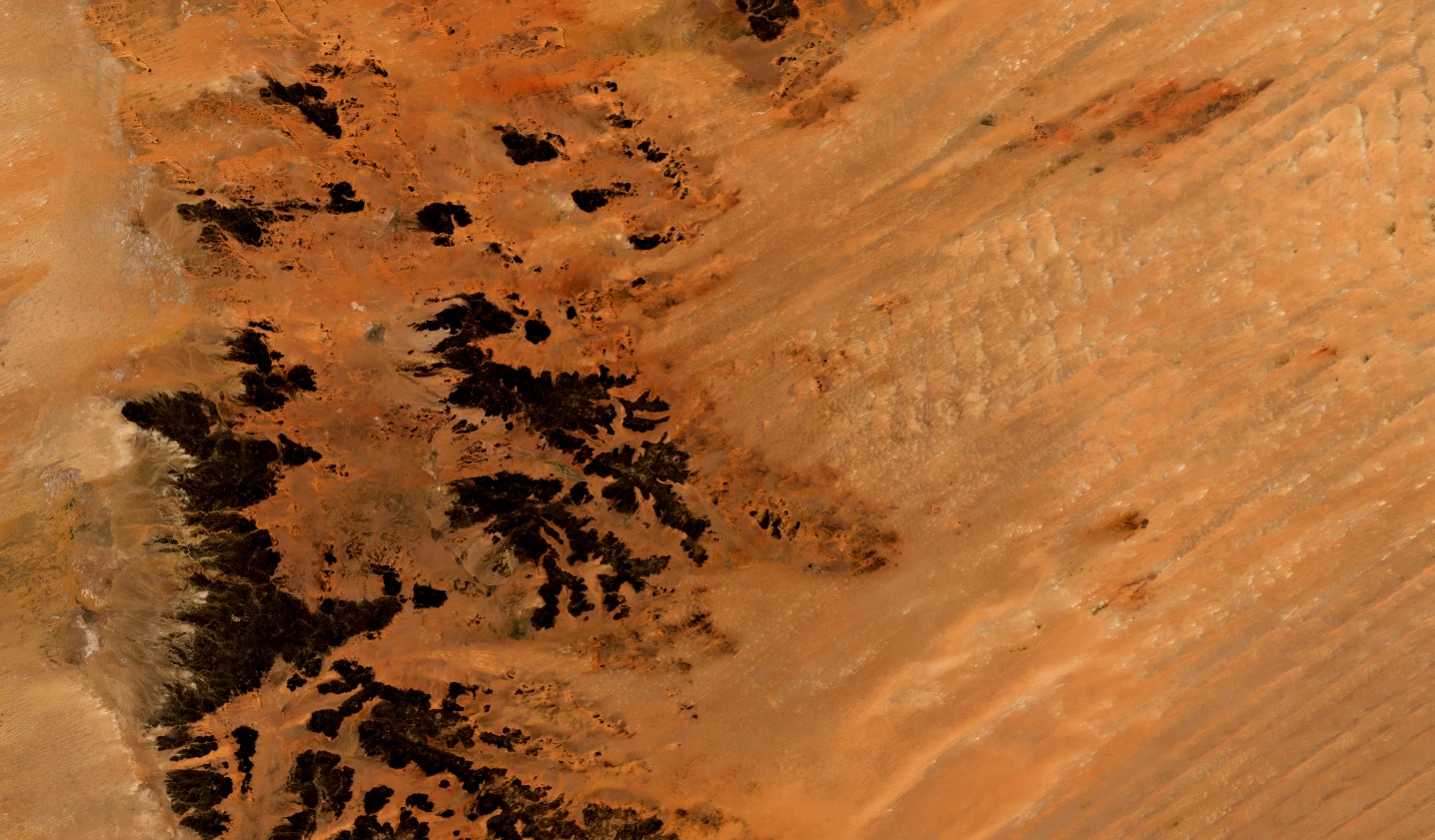
The massif presents a series of steep-edged sandstone escarpments cut by deep gullies, their dark rock contrasting sharply with the pale windblown sand that accumulates along the eastern flank. Smaller outlying hills stand east of the main ridgeline, separated from it by aprons of gently sloping rocky ground that give way to mobile dune fields. The reserve atlas records the high point of this terrain at 732 metres, while the Key Biodiversity Areas database places the broader elevation range of the site between 300 and 732 metres.
Water, Ecology, and Seasonal Use
The dry Dillia valley and scattered seasonal depressions described in Niger’s field description submitted to UNESCO collect water after infrequent rains, creating temporary pools that sustain life across otherwise desiccated ground. This layering of bare rock, sandy plains, shallow wadis, and dune corridors produces a range of microhabitats at the Saharan-Sahelian boundary. Historical field surveys conducted by IRD researchers documented dorcas gazelles and other Saharan-adapted wildlife. Wider reporting on the reserve describes Toubou communities practising seasonal camel and goat herding across its plains.
Archaeological Record
In 1972, Gérard Quéchon and Jean-Pierre Roset carried out a systematic field campaign in the Termit area, documenting traces of past habitation, stone tools, and rock engravings. Quéchon's subsequent published analyses examined groups of engraved sites across the region. One study records an engraved oryx.
Conservation and Recognition
Niger submitted the Termit Massif to UNESCO's World Heritage Tentative List on 26 May 2006, citing its dry valleys, seasonal pools, and desert wildlife. In 2012, Niger established the broader Termit and Tin-Toumma National Nature Reserve. A 2023 report from the European Union Delegation to Niger documented local community involvement in reserve management and noted the importance of the area's vegetation to pastoral livelihoods.