
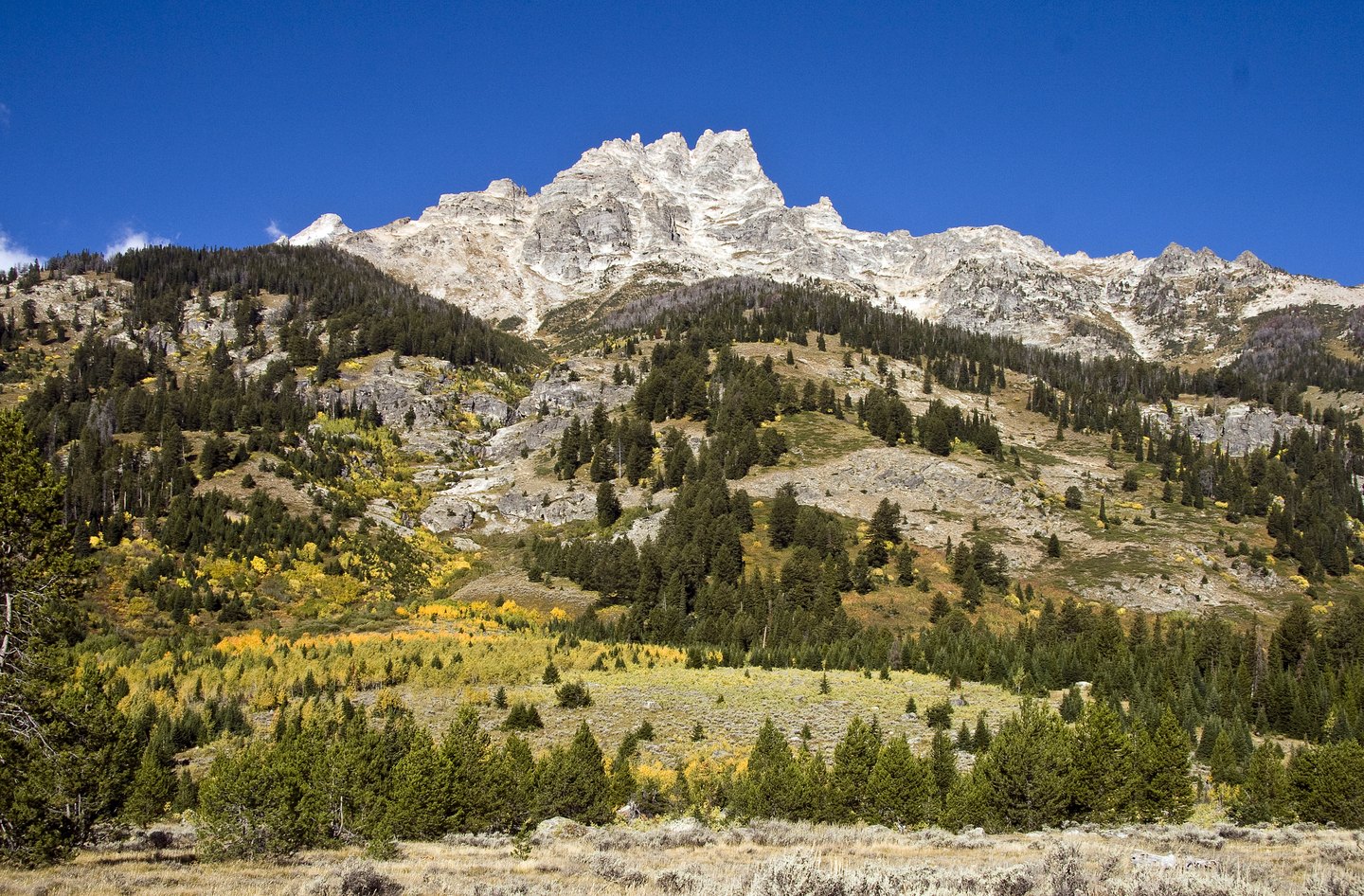
Stripes of Contrasting Rock
The National Park Service identifies the striped appearance of Teewinot's face as granite intruding into older, darker gneiss. This geological contrast, legible from the valley floor, is one of the peak's most immediately recognizable features.
A Probable First Ascent and an Early Solo Route
In a 1931 American Alpine Journal report, Fritiof Fryxell describes reaching the summit with Philip Smith on August 14, 1929, and qualifies the climb as a probable first ascent, a cautious phrasing that acknowledges the possibility of earlier undocumented attempts. The same report records a later solo ascent via the east couloir by Bubenzer and notes the early spelling Tee-win-ot, identified in that document as unofficial.
A Name Extended into Geology
The USGS Teewinot Formation takes its name from the peak, though it describes sediments found elsewhere in Jackson Hole rather than the high rock of the summit itself. The connection between the place name and the mapped geology is one of nomenclature, not shared lithology.