
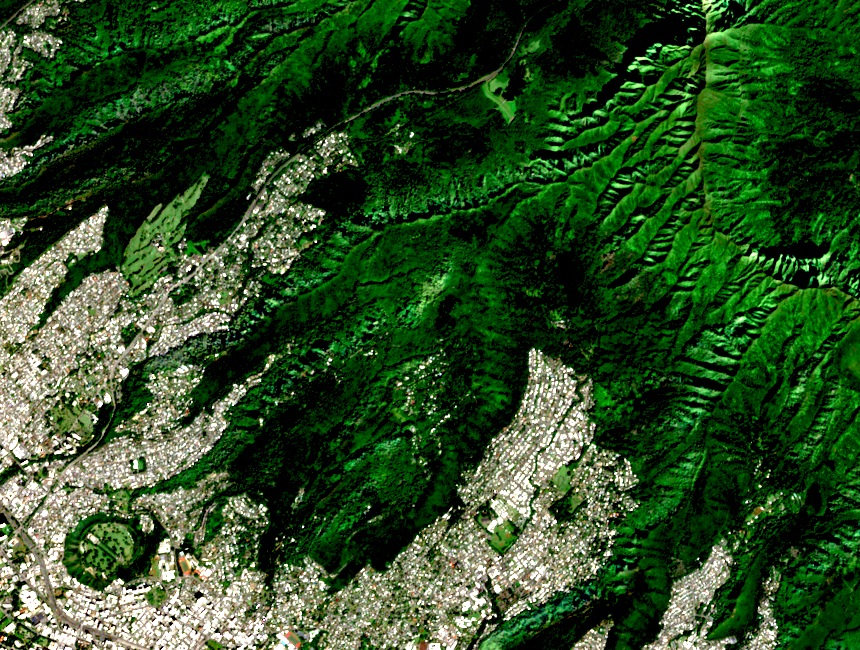
Name and Identity
Puʻu ʻŌhiʻa is the documented Hawaiian place name, confirmed in a Hawaiʻi Department of Land and Natural Resources cultural study that distinguishes it from the nearby Puʻu ʻUalakaʻa, also known as Round Top, which occupies a separate location in the same upland district. The U.S. Board on Geographic Names records the English alias as Tantalus, applied during Western cartographic settlement of Oʻahu.
Volcanic Character and Geology
USGS classifies the cone, associated lava flow, and ash deposits as Honolulu Volcanics — post-shield eruptions that scattered cinder cones and tuff rings across southern Oʻahu. Puʻu ʻŌhiʻa is built from loose, porous basaltic tephra, contrasting with the cemented palagonite tuff of coastal cones like Diamond Head, where eruptions interacted with seawater to produce consolidated rock.
Hydrology and Groundwater Infiltration
A USGS hydrology report notes that the cone's loose cinder is highly permeable, absorbing rainfall rather than generating surface runoff. Precipitation percolates rapidly through the porous structure into subsurface layers. Modest in scale relative to Oʻahu's broader aquifer, the deposit nonetheless behaves markedly differently from the denser basalts and tuffs on adjacent ridges.