
1985 UNESCO Inscription and Rock-Art Chronology
UNESCO inscribed the rock-art sites of Tadrart Acacus in 1985 in recognition of their exceptional painted and engraved imagery. The designated sites contain images spanning from around 12,000 BCE to 100 CE, a range that reflects successive periods of human presence and changing environments across the Holocene. Representations shift across that span from wild fauna to cattle herding and pastoral life, documenting transformations in both ecology and society.
Takarkori Rock Shelter and Holocene Aquatic Fauna
Excavations at Takarkori rock shelter, analyzed in a 2020 study published in PLOS ONE, recovered stratified animal remains including fish bones attributable to tilapia. The stratigraphy links these aquatic fauna to periods when lakes and water bodies occupied parts of the central Sahara during the African Humid Period, providing material evidence of hydrological conditions that no longer exist in the region.
Geomorphology of the Sandstone Massif
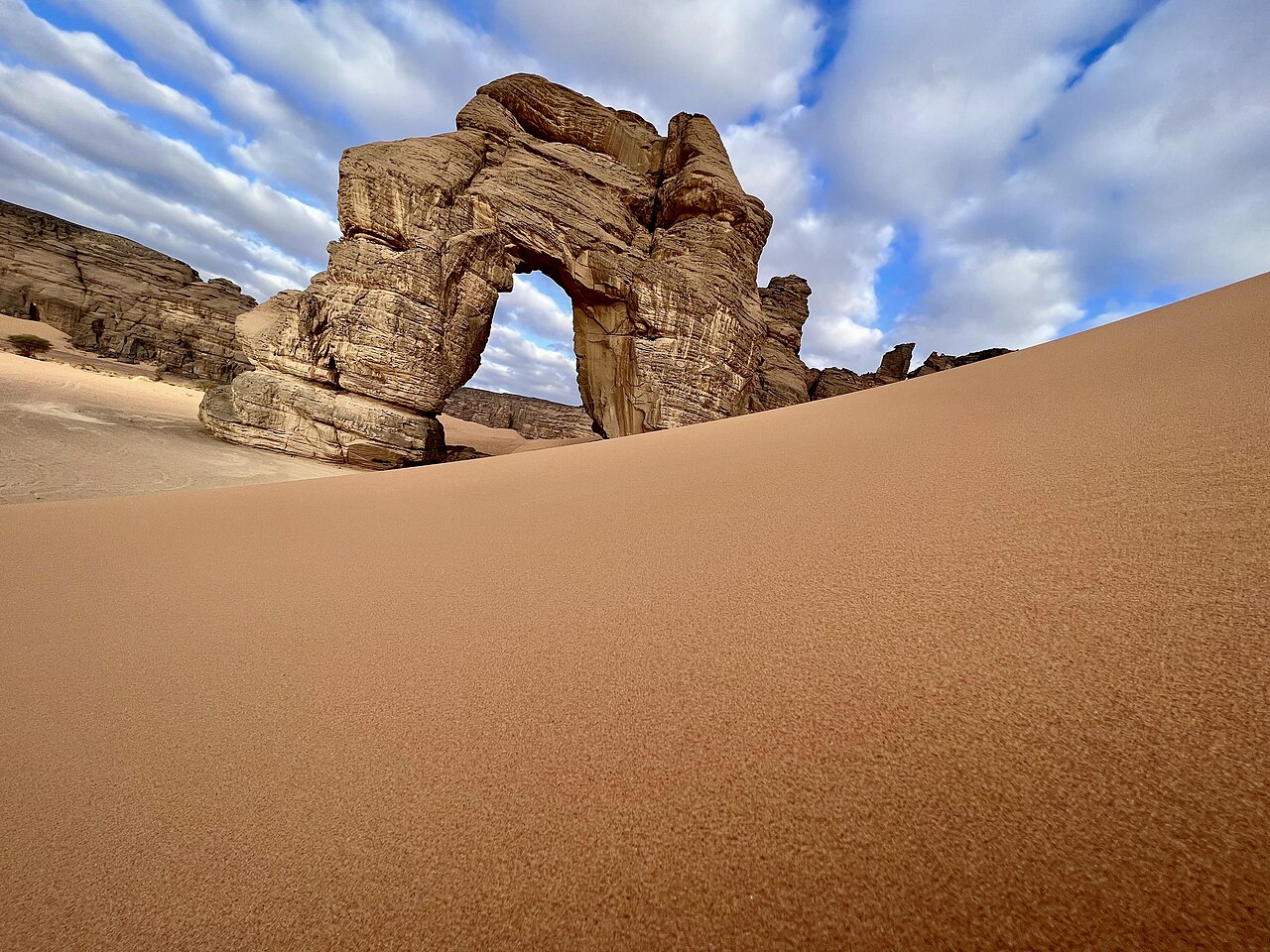
Geomorphological mapping published in the Journal of Maps documents the Tadrart Acacus massif as a cuesta landform developed in Paleozoic sedimentary rock. Differential erosion has produced the pronounced asymmetry between the western escarpment and the more gradually sloping eastern dip-slope, while tributary valleys cut into the massif expose cross-sections of the sedimentary sequence and shelter the painted and engraved surfaces recorded across the site.