
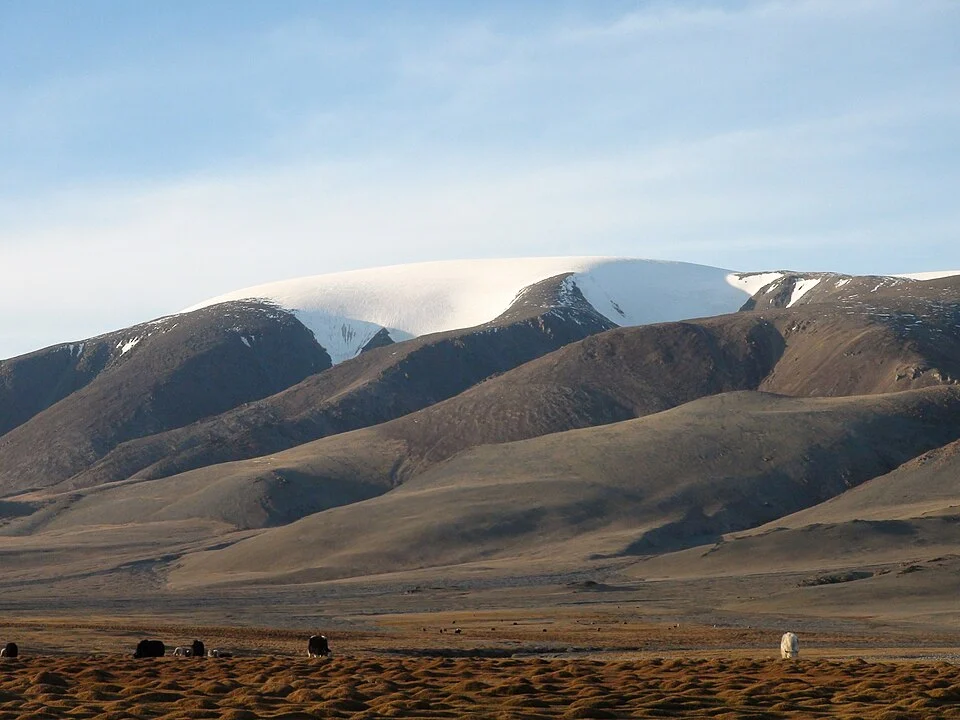
Mongolian–Gobi Altai Transition Zone
Sutai Khairkhan sits at the Govi-Altai and Khovd provincial boundary, where its upper glacier systems occupy a transition zone between the Mongolian Altai and Gobi Altai ranges. This boundary position shapes the mountain's glaciology and ecology, and research on the region's landforms has examined how the two distinct mountain systems influence local climate and ice cover.
Beryllium-10 Dating and Mass Balance Monitoring
Glacial deposits on Sutai have been dated using cosmogenic beryllium-10 analysis, a method that measures isotope accumulation in exposed rock surfaces to establish when glacier ice retreated from a given position. Since 2015, field-based mass balance monitoring has tracked annual ice gain through snowfall accumulation and loss through melt, as documented in a Frontiers in Earth Science study covering western Mongolian glaciers.
Sacred Mountains Tentative List Nomination
Mongolia's 2015 serial submission to UNESCO's World Heritage Tentative List includes Sutai Khairkhan among the country's Sacred Mountains of Mongolia. The name element khairkhan signals reverence in Mongolian tradition, and peaks bearing it serve as sites for ovoo ceremonies. The submission groups Sutai with other worshipped peaks, framing the tradition as a coherent cultural landscape for international recognition.