
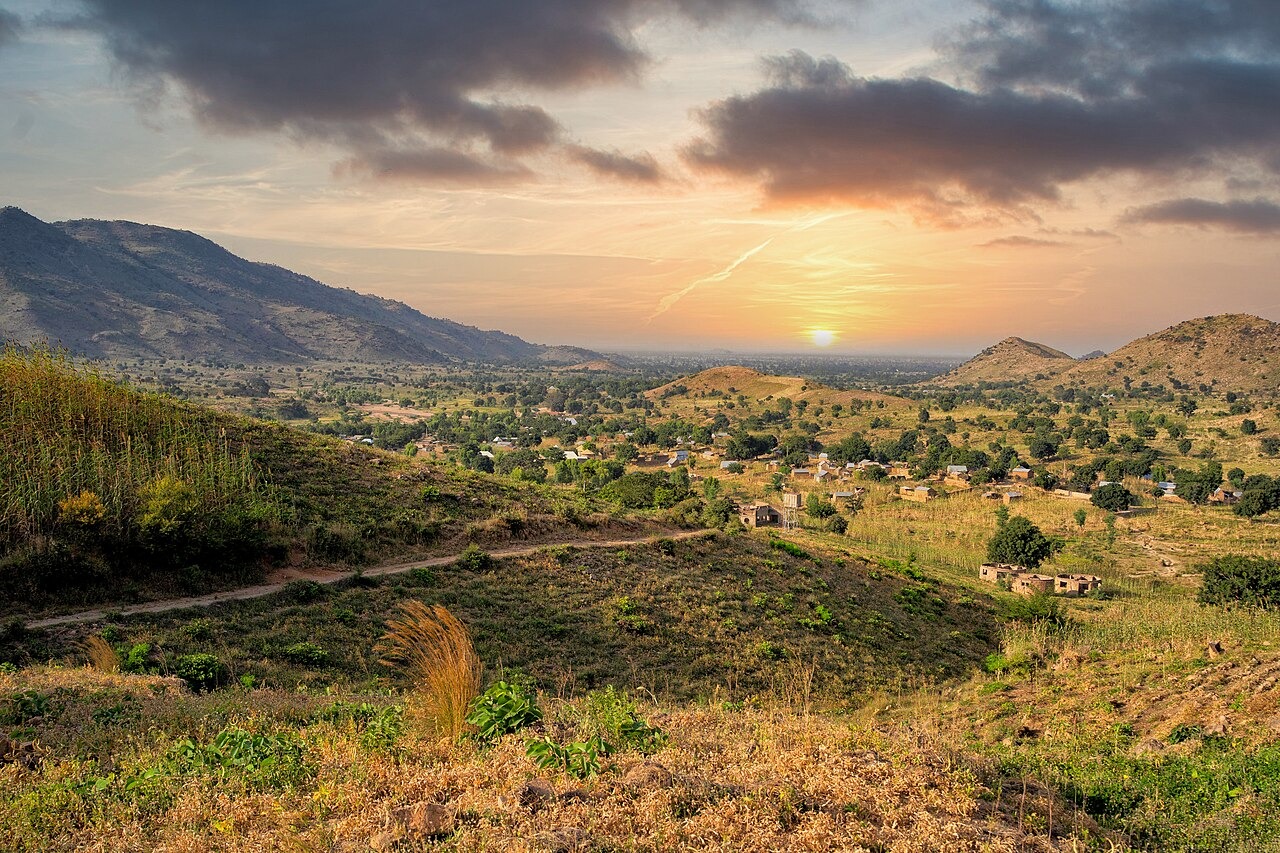
A Landscape Shaped in Stone
Stone terraces, paved approaches, and clustered buildings cover the hillslope in a configuration shaped by generations of continuous habitation. The Hidi's palace sits at an elevated position within the settlement, commanding views over the terraced land below. Nigeria's State of Conservation reports to UNESCO document the settlement layout as an integrated landscape rather than a collection of isolated monuments, with the approach routes and terrace systems forming part of the same designed environment that the hilltop buildings crown.
Iron Production and Craft Networks
Field excavations conducted by the University of Calgary's Mandara Archaeological Project have uncovered furnaces, slag deposits, and magnetite at the site, constituting material evidence of former iron production. The industry connected local farming communities and craft specialists within the broader regional economy of the Mandara Mountains. UNESCO's inscription and Nigeria's site management documentation treat this industrial history as inseparable from the agricultural terracing and settlement fabric, together representing a landscape in which metalworking and cultivation reinforced one another across the same hillslope.
Living Landscape and Ongoing Conservation
Sukur remains an inhabited cultural landscape, and the Hidi continues to hold customary authority within the community. Nigeria's National Commission for Museums and Monuments manages the site under a plan submitted to the World Heritage Committee, addressing both the preservation of physical fabric and the continuity of customary practices. The conservation plan encompasses the stone terraces, palace and paths that people continue to use, alongside places documenting older practices such as iron smelting.