
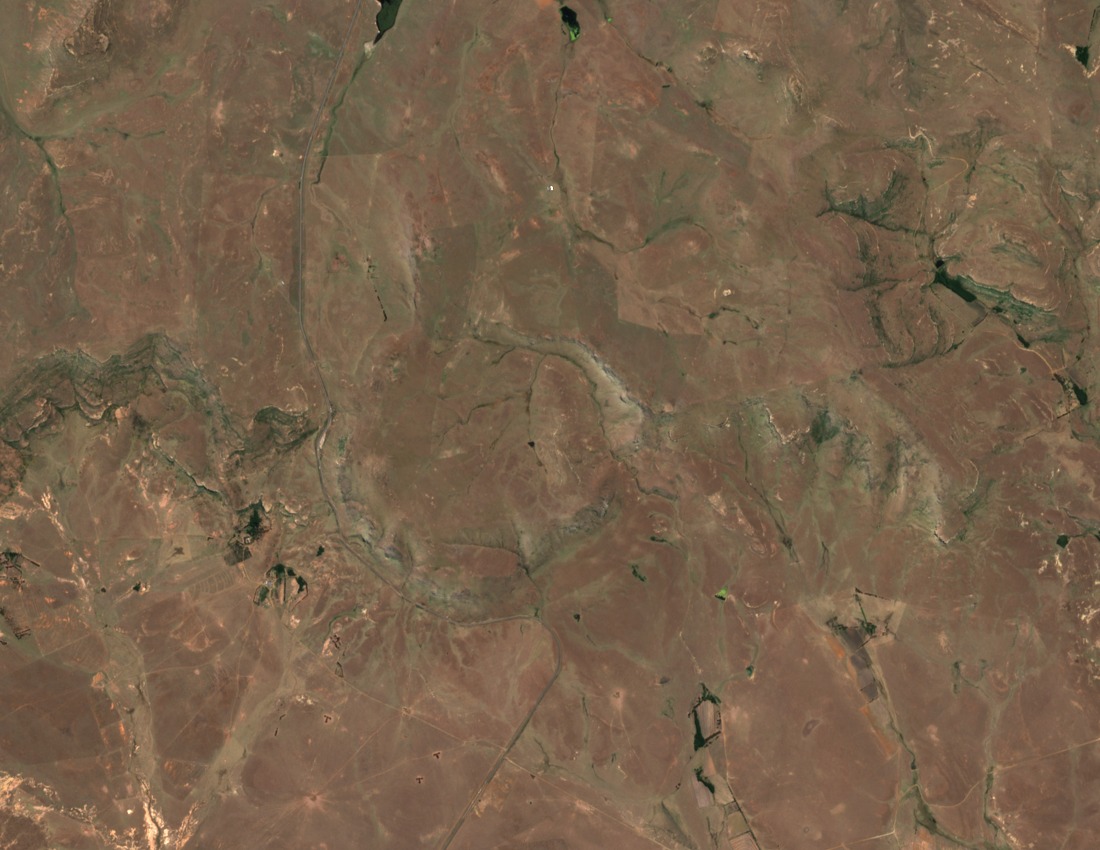
Molteno, Elliot, and Clarens Formations
Research published by the University of KwaZulu-Natal and the Water Research Commission identifies three successive units within the Stormberg Group. The Molteno Formation comprises coarse sandstones and mudstones deposited by braided river systems. Above it, the Elliot Formation records a shift toward muddier floodplain conditions, while the Clarens Formation consists predominantly of fine-grained aeolian sandstones representing wind-blown dune fields.
Bipedal Theropod Trackways in Molteno-Age Beds
A study conducted through the University of the Witwatersrand reports three-toed trackways recovered from ancient river flood deposits in Molteno-age strata of the northeastern Cape. Researchers interpret the prints as evidence of bipedal theropod dinosaurs moving across Triassic-era floodplains. The finds contribute to understanding early dinosaur distribution across the Gondwanan interior during the late Triassic period.
The Battle of Stormberg, December 1899
On 10 December 1899, British forces under General Gatacre suffered a significant defeat near Stormberg Junction, a strategically important railway point in the northern Cape Colony. The National Army Museum records this engagement as one of three British reverses within a single week — alongside Magersfontein and Colenso — that became collectively known as Black Week and reshaped British command decisions in the early months of the South African War.