
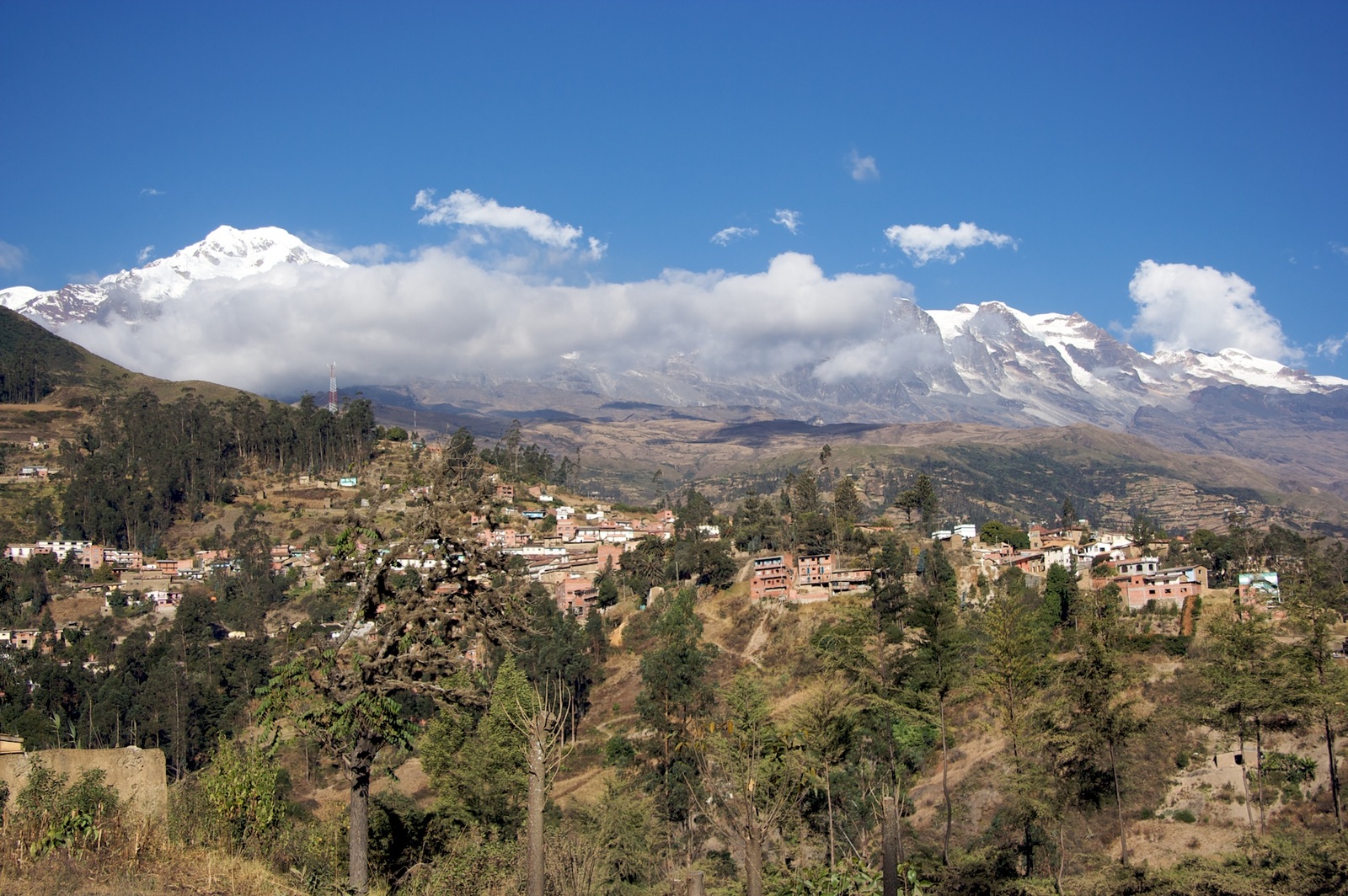
Valley morphology and Quaternary processes
In his 1982 thesis, geologist Jaime Argollo mapped moraines in the valleys of the Cordillera Real. These deposits of rocks and sediments accumulated by ancient glaciers mark phases of ice advance. In a later work on the Bolivian Quaternary, Argollo and his colleagues interpreted that rivers on the Amazonian slope captured part of the waters that previously drained toward the Altiplano. The Sorata River gradually incised its channel into the western piedmont of the range.
Water and the valley's historical economy
The case study carried out by CEPAD documents that meltwater from Illampu and local springs constituted the water supply sources for the urban core of Sorata at the time the study was conducted. On the economic front, the municipal government of Sorata links the valley's historical commercial role to the neighboring gold-mining districts of Tipuani and Mapiri, areas with which Sorata maintained exchange relationships that shaped its position in the Larecaja region.
The 1781 uprising and documents from the La Paz Archive
In August 1781, in the context of the indigenous uprising against colonial rule in Upper Peru, Sorata was seized by forces led by Andrés Túpac Amaru. The Bolivian Ministry of Cultures places the participation of Gregoria Apaza in that episode, noting the mediating role she played in the alliance that made the action possible. The catalogue of the La Paz Archive records the letter that commander Sebastián de Segurola sent to Viceroy Vértiz on 18 October 1781, in which he reported on the fall of the town — a document that constitutes a direct account of events from the perspective of the colonial authorities.