
A three-stage volcanic edifice
Geochemical research describes a first stage of fissure emissions that laid the foundation of the edifice. This was followed by a central-vent phase in which successive eruptions built a broader structure, with interspersed collapse episodes. The third stage is linked to the activity of ring fractures, shaping a constructive history developed through distinct mechanisms over time.
The inventory of identified rocks includes basaltic andesites and rhyodacites, with dacites predominating. This compositional variety reflects the evolution of the magmatic system across the different eruptive phases.
Glaciers and erosion
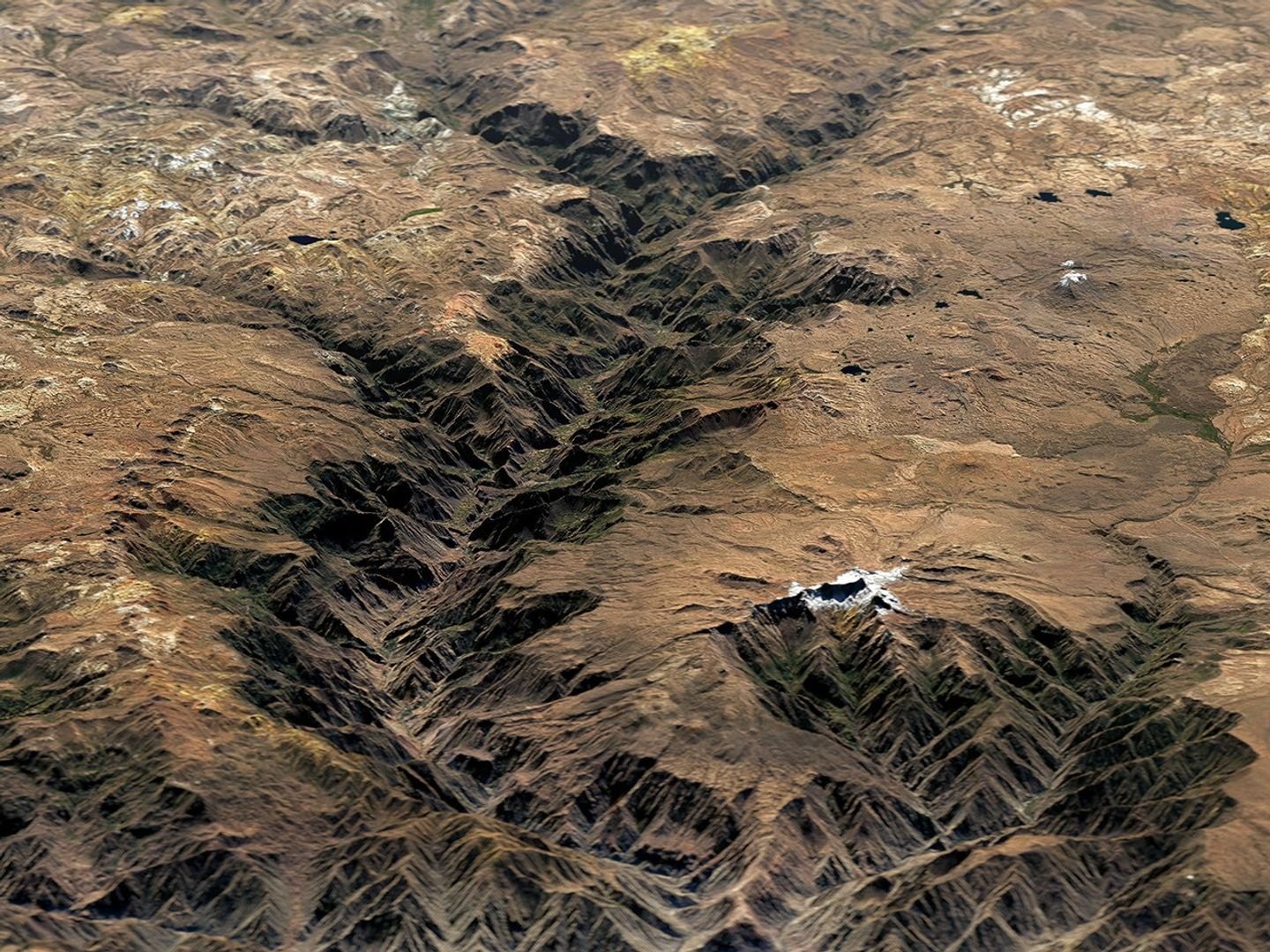
The current morphology of Solimana is the result of intense erosion accumulated since the Pleistocene. The Smithsonian describes a weathered edifice whose topography no longer retains the forms typical of a young stratovolcano. Historical studies have recorded the presence of ice on its slopes. Those measurements correspond to the period in which they were taken and do not describe the present state.
Fumarole and residual activity
The Smithsonian documents the existence of an active fumarole on Solimana. Gas emissions and eruptive history are evidence of a different nature. The presence of a fumarole indicates that the volcanic system maintains residual thermal activity. The eruptive record reflects magmatic behavior over geological timescales. Solimana thus illustrates how a volcano can show geochemical surface activity without recorded eruptions in historical times.