
Summit and Terrain
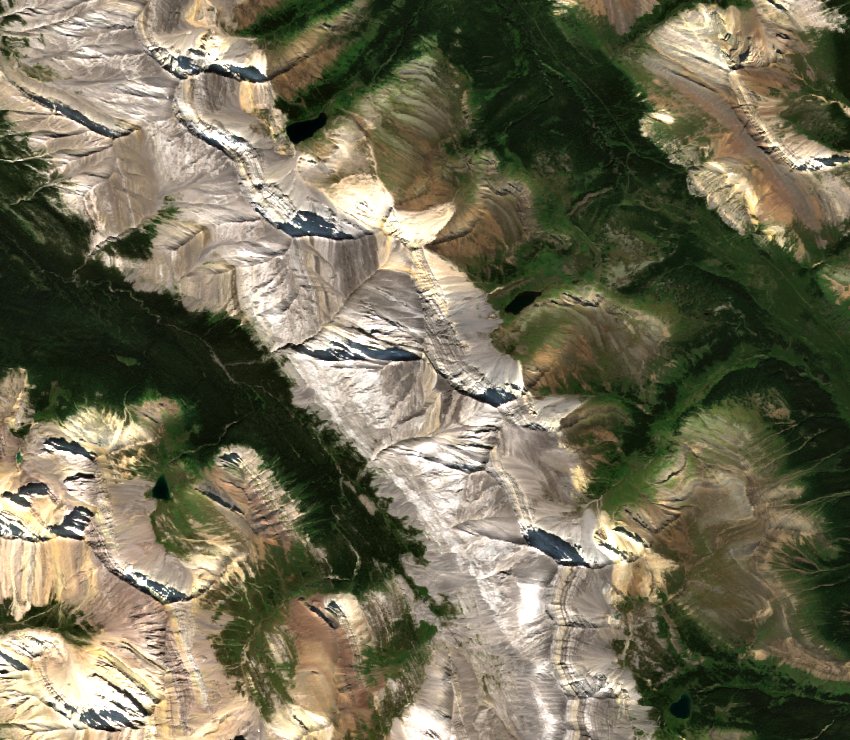
The peak is distinct from nearby Prow Mountain and sits roughly 1.2 km west-southwest of the official center of Snowflake Lake, according to a GPX track recorded during a firsthand ascent in July 2021. That same report described a steep escarpment on the lake-facing side and narrow rocky terrain along the high ground.
Snowflake Lake received official recognition in 1966. The adjacent summit takes its informal name from the lake. The 2021 climber also reported finding pieces of petrified wood with visible tree rings among tilted sedimentary rocks north of the lake.
A Naturally Fishless Lake Altered and Restored
Snowflake Lake below the eastern escarpment was naturally fishless. Park managers introduced non-native brook trout in the 1960s, and zooplankton monitoring at the lake began in 1966. The arrival of fish coincided with the disappearance of large native zooplankton including the Arctic copepod Hesperodiaptomus arcticus, a small crustacean. The trout population died out by the mid-1980s, but according to the 1999 McNaught study, the copepod did not return on its own; researchers reintroduced it to the lake in 1992.
The 1999 paper reported that H. arcticus numbers grew in the years following reintroduction yet remained well below historical densities as late as 1995. A 2024 long-term study by Stuparyk and colleagues, drawing on data through 2022, found that Snowflake Lake and comparable study lakes had gradually shifted back toward zooplankton assemblages typical of naturally fishless lakes over the intervening decades.
What the Long Record Shows
The 2024 study found that a neighboring lake where fish also died out recovered more quickly without a copepod reintroduction. The contrast between those lakes shows how long recovery can take after the introduced fish are gone.