
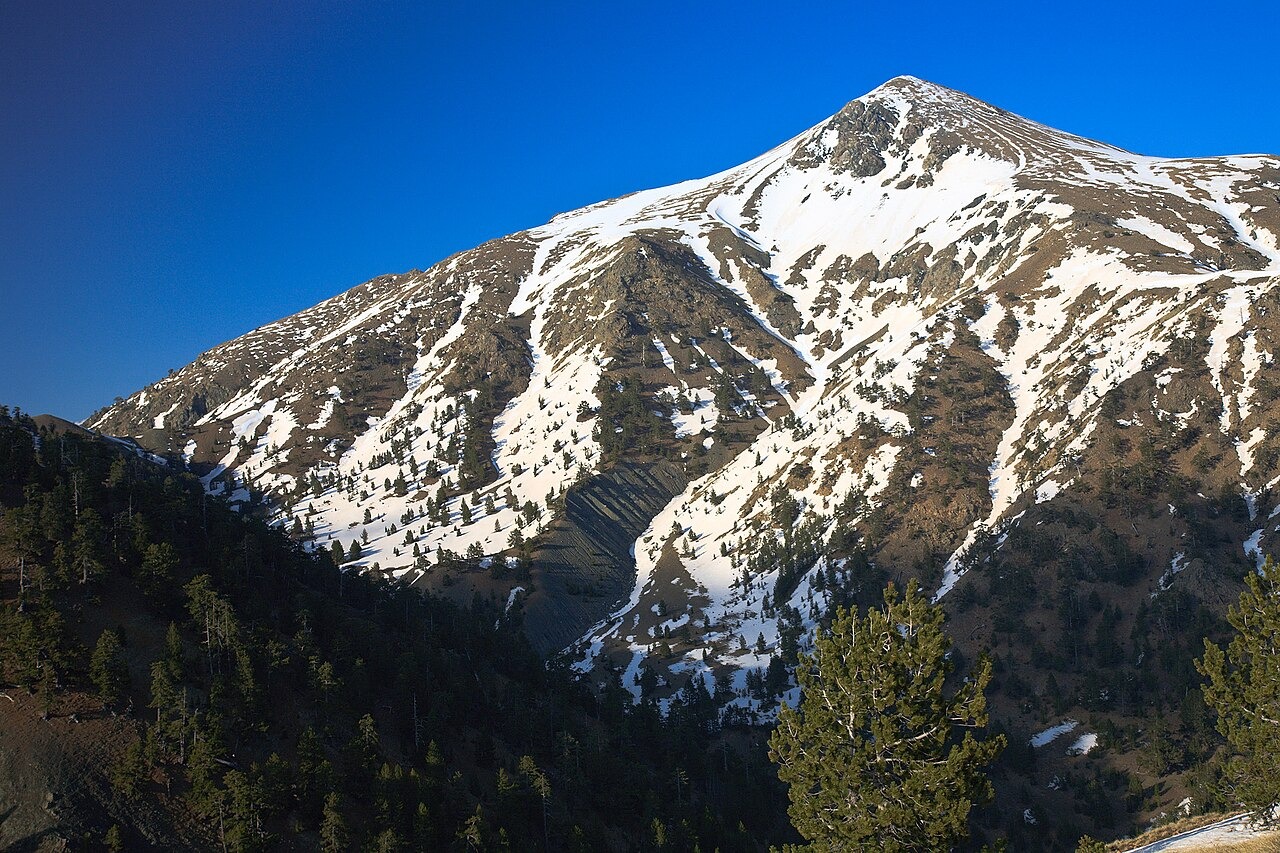
Ophiolite Foundations
The dominant rocks of Smolikas belong to the Pindos ophiolite, a sequence that includes serpentinite, dunite, and harzburgite, as identified in field studies of the massif. Ophiolites represent fragments of former oceanic crust and upper mantle that were tectonically displaced onto continental margins, bringing deep-earth material to the surface where it can be directly examined. The Northern Pindos National Park, administered by NECCA, recognises this ophiolitic geology as a defining characteristic of the landscape.
Glacial Record
Sedimentary layers and moraines preserved on the slopes of Smolikas document multiple glacial advances during the Pleistocene. Researchers identify a glacial sequence by mapping the distribution of till deposits, moraines, and other landforms produced by ice movement, then correlating them stratigraphically to reconstruct successive periods of glacier growth and retreat. Published field studies and articles in the Journal of the Geological Society draw on this evidence from the Pindus to reconstruct the range's glacial history.
Drakolimni
Below the summit lies a glacial tarn known in Greek as Drakolimni, also called Lyga. The Greek National Tourism Organisation notes its notable blue tint and heart-shaped profile, and explains that the Aromanian name Laku Vinitu means Blue Lake.