
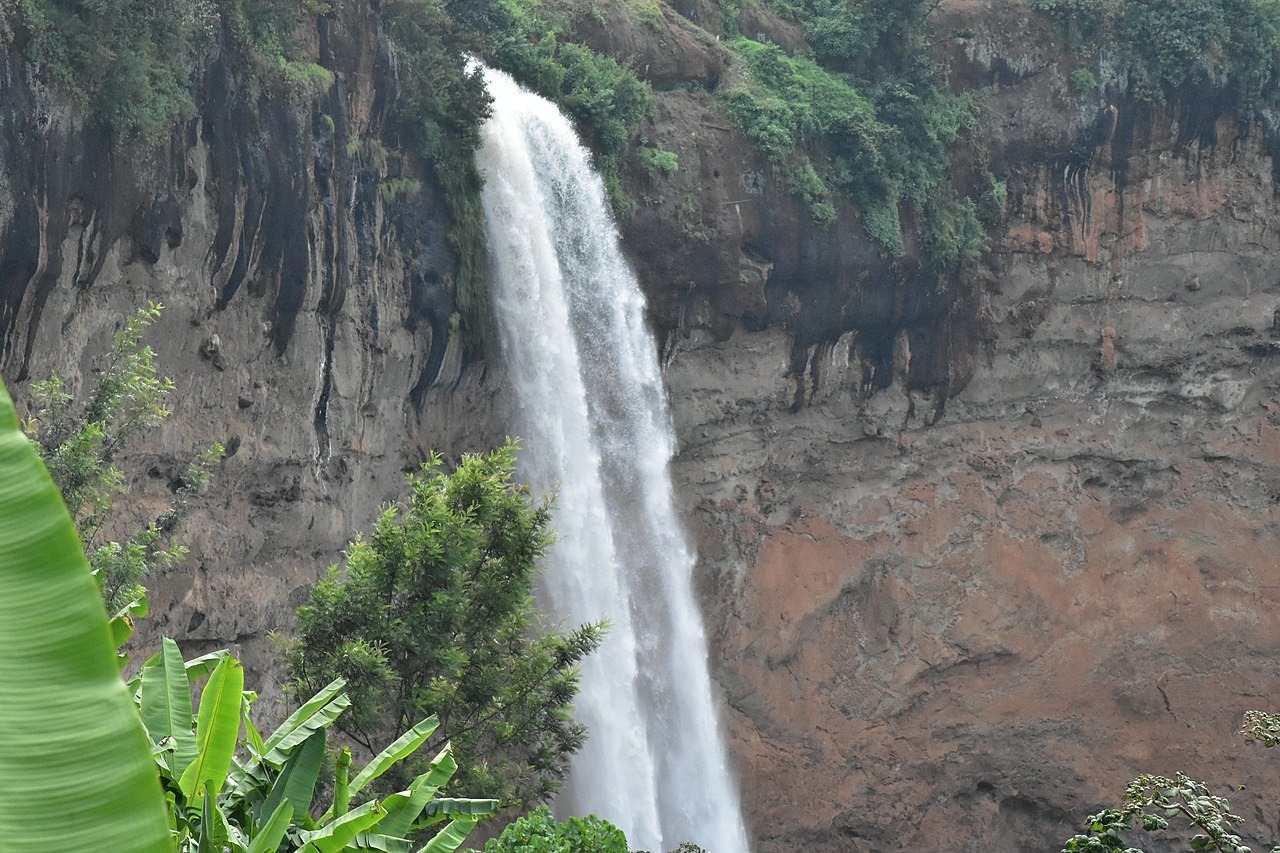
Volcanic Terraces and the Sipi River Descent
Mount Elgon is one of Africa's oldest and largest extinct volcanoes, and its northwestern slopes channel rainfall into streams that cut steeply through successive lava and ash deposits. Geology Today documents how the Sipi River exploits fractures and resistant basalt layers to form each of the three falls, producing the staircase profile visible from the foothills. The vertical faces between pools expose distinct stratigraphic bands laid down during successive eruption cycles.
Slope Farming and Coffee in the Kapchorwa Foothills
The terraced hillsides around Sipi support smallholder agriculture at elevations suited to Arabica coffee cultivation, and the Uganda Tourism Board identifies this farm landscape as a defining feature of the visitor experience. Households on the slopes of Mount Elgon grow coffee alongside food crops on fields that follow the contours of the volcanic terrain, creating the patchwork of cultivation visible from the falls viewpoints.
Mount Elgon's Cross-Border Conservation Landscape
UNESCO's tentative World Heritage nomination for the Mount Elgon ecosystem recognises the mountain's transboundary forest and moorland as a significant Afromontane conservation area shared between Uganda and Kenya. Mount Elgon National Park begins upslope from the Sipi Falls area, and the park boundary means the falls and surrounding farmland sit at the interface between protected highland habitat and the settled foothills of Kapchorwa District.