
Kashyapa I and the Fortified Capital
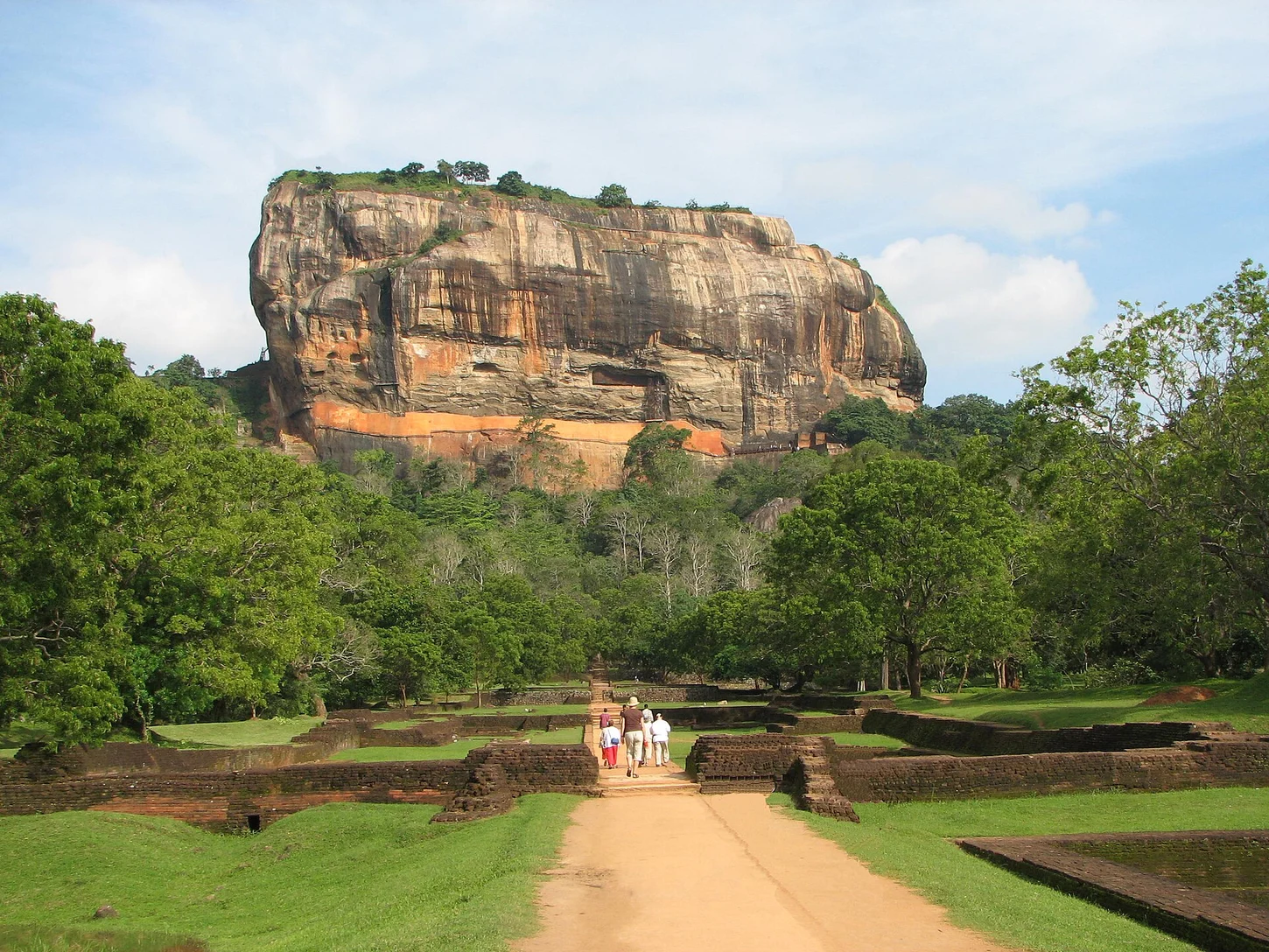
From 477 to 495 CE, Kashyapa I used Sigiriya as a fortified capital. Summit foundations outline a palace complex, while the slopes and ground below were shaped into gardens, tanks, and terraces documented by the Sri Lanka Central Cultural Fund as a coherent planned landscape treating the monolith and its setting as a single architectural project.
Water Gardens, Mirror Wall, and Painted Figures
Symmetrically arranged water gardens extend from the rock's base, incorporating channels and pools that remain legible as designed infrastructure. Along the ascent route, a long section of polished plaster known as the mirror wall runs beside painted female figures on a sheltered rock face, both subjects of sustained art-historical study.
Lions' Paws, Summit, and 1982 Inscription
Two sculpted lions' paws at the base of the final ascent survive from a larger gateway structure that gave the site its name. The summit plateau retains foundation walls and cisterns from Kashyapa I's palace. UNESCO's 1982 inscription encompasses the full fortified capital — summit, gardens, and hydraulic works — as an outstanding example of early urban planning.