
Formation and Age
A 2020 radiocarbon study dated pyroclastic deposits of Shastina and Black Butte to approximately 10,700 calibrated years, with the age ranges of the two features overlapping rather than marking a single shared moment. USGS research places Shastina's growth within a geologically brief constructive phase that produced both lava flows and summit domes, distinguishing this episode from the broader eruptive history of Mount Shasta.
Black Butte and the Related Episode
Black Butte lies below Shastina's flank as a compositionally distinct dome complex, slightly younger within the same related volcanic episode. USGS field studies associate ash-rich deposits moving downslope with this phase of activity, linking the two features while maintaining the distinction between them. Together they define what researchers call the Shastina-Black Butte episode in the Shasta volcanic sequence.
Position on Mount Shasta
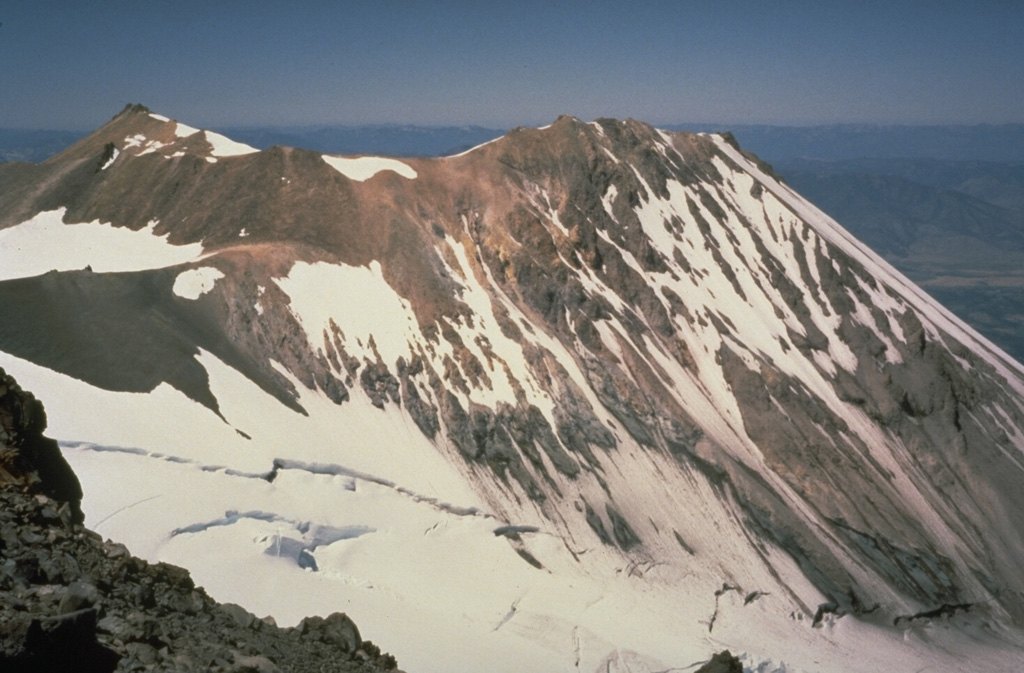
Shastina occupies the west flank of Mount Shasta as a secondary cone distinct from the principal Hotlum summit mass. The Whitney Glacier in the intervening saddle marks the boundary between the two cone structures. Shastina's broad western profile identifies it as a discrete landform within the larger Shasta volcanic complex.