
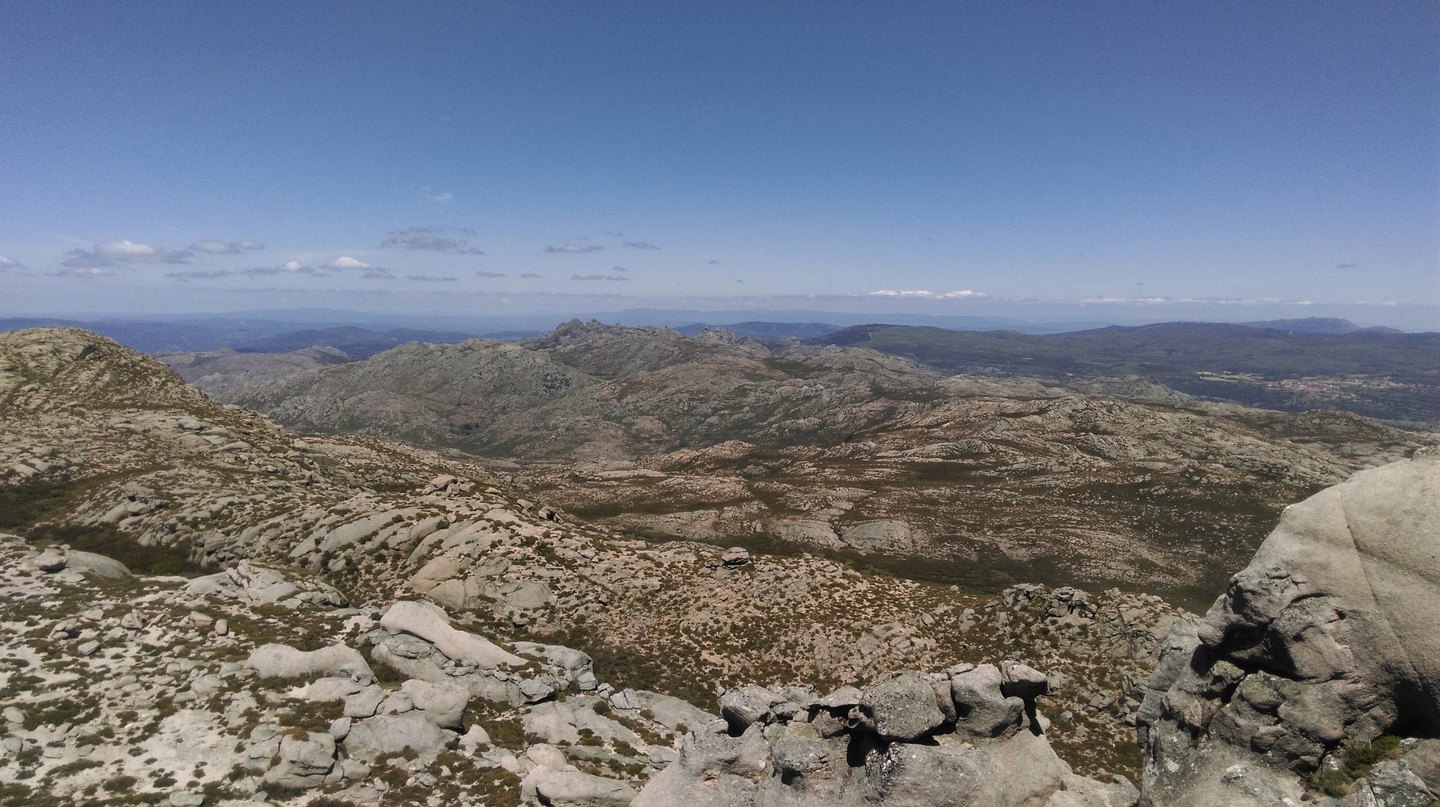
Portugal's only national park
Peneda-Gerês National Park was established in May 1971, becoming the first protected area with that status in Portugal and, to this day, the only one. Covering 695.9 km², the park spans territory in the districts of Viana do Castelo, Braga and Vila Real, in a configuration that crosses the ranges of Peneda, Soajo, Amarela and Gerês. The Serra do Gerês, where Pico da Nevosa is located, represents the most recognisable core of this ensemble, lending the park one of its most commonly used informal names — simply, Gerês.
The longevity of its protected status, maintained for more than five decades, has profoundly shaped both the landscape and the relationship of local communities with the territory. The park is administered in the Norte Region of Portugal, and its creation preceded by several years the consolidation of the Portuguese national protected areas system.
Border territory and transboundary biosphere reserve
Peneda-Gerês National Park borders, to the north, the Baixa Limia – Serra do Xurés Natural Park, located in the autonomous community of Galicia, in Spain. This territorial contiguity between the two protected areas gave rise to their joint recognition by UNESCO as the Gerês-Xurés Biosphere Reserve, a model of transboundary management that encompasses shared ecosystems and ecological corridors that cross the political boundary between the two countries.
Integration into a biosphere reserve system implies objectives that go beyond simple conservation: it includes promoting the sustainable development of the communities inhabiting the buffer zone and conducting scientific research. For the Serra do Gerês, this framework reinforces the ecological relevance of a landscape that combines Atlantic mountain terrain, high-altitude Mediterranean vegetation and traces of millennia of human occupation.
A range in the far north
The Serra do Gerês lies in the Norte Region of Portugal, in an area where the terrain takes on a more pronounced character than in the country's coastal zones. Its position close to the Spanish border and the altitude of Pico da Nevosa define a mountain environment with its own climatic regime, subject to high rainfall and frequent fogs that influence the vegetation and the watercourses that rise on the slopes. The name Nevosa — evoking snow — is itself an indication of the conditions the summit can present in winter.