
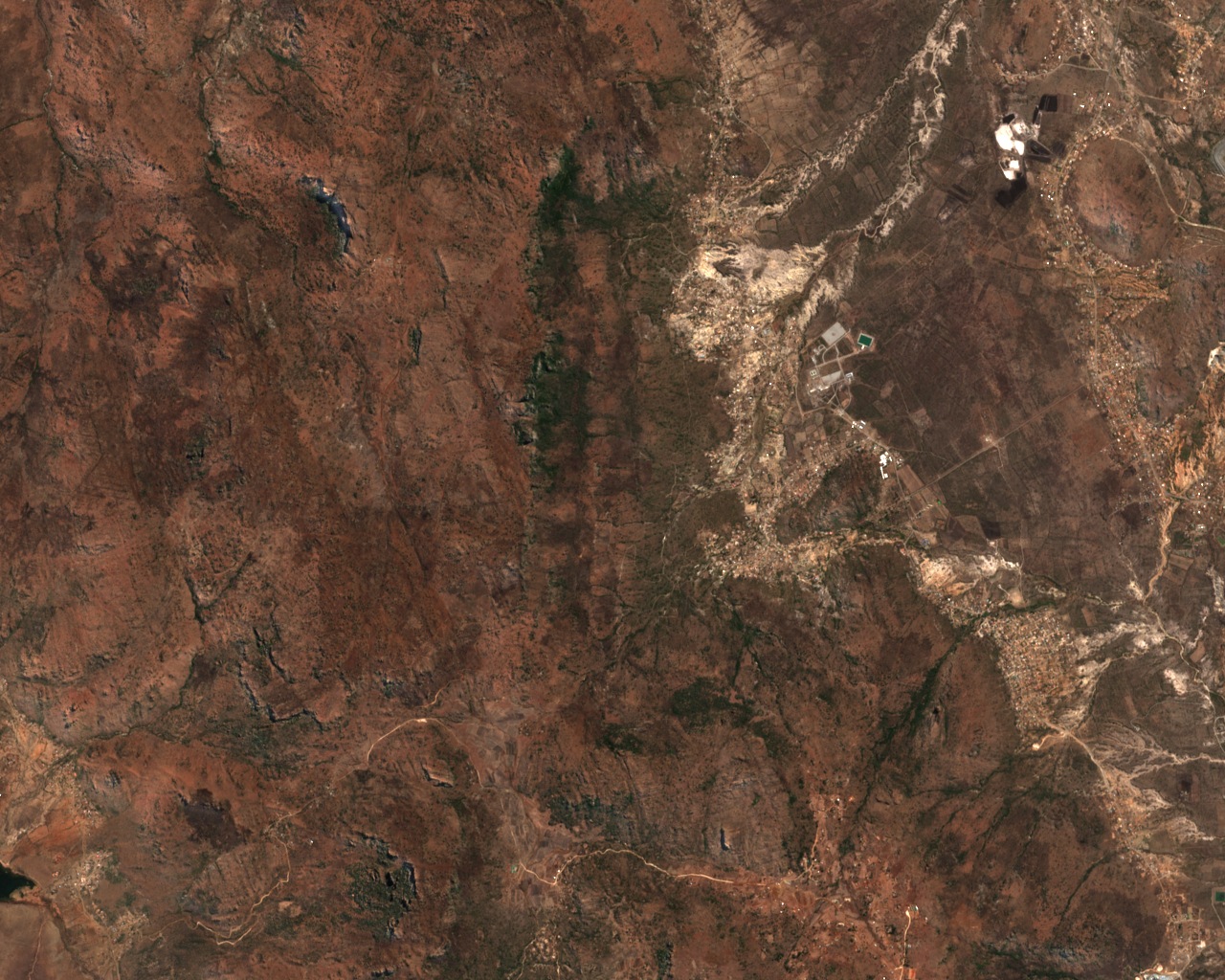
Geology and Physical Landscape
The rocky substrates of the Leolo Mountains belong to the eastern Rustenburg Layered Suite of the Bushveld Complex, a vast intrusion dated by current petrology literature at approximately 2.055 billion years. Erosion has since shaped the modern relief. The South African National Biodiversity Institute documents large valleys cut by the Steelpoort, known locally as the Tubatse, and Olifants rivers, creating the topographic variety that underpins the region's ecological range from lowland savanna through grassland to isolated forest patches on sheltered slopes.
The eastern limb of the Bushveld Complex in this area carries chromium and platinum-bearing horizons that have driven significant mining activity, bringing documented changes to habitat in affected portions of the landscape.
BaPedi Settlement and the Strongholds of the Leolo Mountains
The BaPedi established the Leolo ridges and surrounding valleys as a political and military heartland well before the nineteenth-century conflicts that made the region widely known in South African history. South African History Online records that King Sekwati moved his capital to Thaba Mosega, and that Sekhukhune I succeeded him in 1861. The elevated terrain and naturally defensible positions of the Leolo Mountains were integral to BaPedi governance, with the valley site of Tšate — the standard spelling used by the Fetakgomo Tubatse Local Municipality, with the older form Tjate appearing in earlier sources — functioning as a principal stronghold.
After the campaigns fought between 1876 and 1879, Sekhukhune I took refuge at a cave on Grootvygenboom Ridge known as Mamatamageng, according to the historian Mahunele Thotse. He was captured on 2 December 1879. Tšate was proclaimed a provincial heritage site on 23 February 2007, according to the Fetakgomo Tubatse Local Municipality.
Ecological Diversity and Afromontane Fragments
The South African National Biodiversity Institute identifies the Leolo Mountains as supporting savanna, grassland, and Afromontane forest fragments whose distribution depends on the interaction of altitude, aspect, and relief. These vegetation types occupy distinct niches within a relatively compact mountain area, making the Leolo ridges ecologically more complex than the surrounding lowland would suggest. The 2002 grassland and wetland survey by Siebert and colleagues documented that variation at the community level, tracing how soil moisture gradients across valley floors and slopes produce distinct assemblages of plant species.