
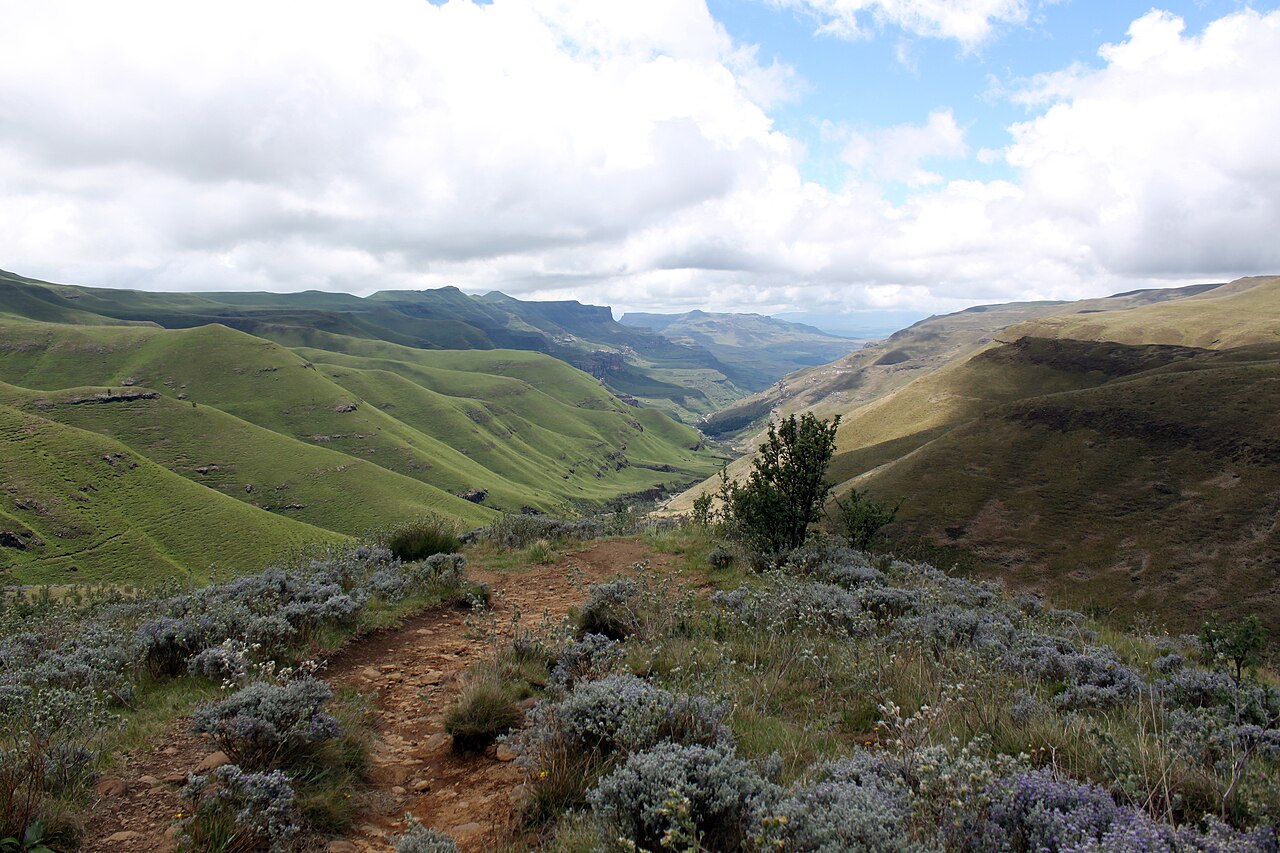
Jurassic Basalt, Sandstone, and Dolerite Intrusions
The SAICE geotechnical field report attributes the pass's rock sequence to Jurassic basalt capping older sandstones and mudstones, with dolerite intrusions cutting through the formation. This stratigraphy produces marked variation in slope stability and drainage behaviour along the ascent, factors that engineering assessments have consistently identified as central to any road construction work in the corridor.
Wool, Mohair, and the Alexander Trading Depot
South African Tourism records a long-established trade route along which Basotho ponies carried wool and mohair down into Natal for barter. David Alexander formalised part of this activity in 1955 by establishing a company depot at the pass, providing a fixed commercial point within a corridor that had already functioned as an exchange route between the highland and lowland economies for some time before that initiative.
The 2006 Joint Road Upgrading and Border Project
In July 2006 the South African and Lesotho governments jointly announced a road upgrading and border relocation project for the pass. Engineering reports associated with the project detail how steep grades, surface drainage requirements, and variable rock conditions at the site shaped the technical scope of the proposed works, reflecting the sustained complexity of maintaining infrastructure across this section of the Drakensberg escarpment.